Womens Health

Changing Views of The Safe Cosmetics Act 2010

When I first started working with chemists 3 years ago, I was a proud signer of the  Safe Cosmetics Datatbase.   While I still stand by many of their articles, and much of there studies, I can see a common thread to many exposed thoughts around my field. You, and I must always thinking critically and empirically.  Who wrote it? What is the motive?  What is the backing of the research and other truth that surround it?

Yes, I DO believe cosmetics could and should be safer, and cosmetics labeling in the USA DO need more transparency. Safety can always be improved in any field, especially in the light of new scientific data, but SCA 2010 over-reaches what is needed to such an extent that, with the possible exception of distilled water, I cannot think of any cosmetic ingredient that would be acceptable under its terms.

Back from the Fall of the Roman Empire as the Grain Tax came from government, this is example of how the Government now rules the Free Market. This is how the "best for all mankind" will come into the personal care industry and regulate ALL and put many true capitalistic entrepreneurs OUT of business.

To bring in the other side, take your time to read about others comments on the .....

The Safe Cosmetics Act 2010

Read about Rober TIsserands Article Here

Quoted from Personal Care Truth Website: A Campaign Against Campaigns, Or One in Particular

The “Campaign for Safe Cosmetics” (CFSC) is a misnomer. It is NOT a campaign for safe cosmetics. It is a part of the political lobbying process engaged in by the Environmental Working Group, amongst others. In other words it is part of Ken Cook’s ragbag army of professional lobbyists (one of whom actually lobbies for an oil company), career  anarchists, and a large number of well-meaning, but naive, dreamers. They rely on misinformation, disinformation and downright lies in order to scare the ordinary consumer.

I find the existence of a campaign for SAFE cosmetics an abhorrent insult to the rest of the industry, as the implication is that, if you are not a signatory to this campaign, you neither care about the safety of cosmetic products and the products you produce may not be safe. There is an insufferable smugness about the CFSC – a “we are right, and everyone else is wrong” kind of attitude. It is unfortunate that, in fact, it is the CFSC that is wrong.

How can I make this bold claim?  Read the rest HERE.

What do you think? I would love to hear your view!

Do you really absorb up to 60% of what we apply to our skin?

I remember back to 3 years ago when the phrase "we  absorb up to 60% of what we apply to our skin” was just starting to be used among natural beauty pioneers that were health minded as well.   Through my Functional Medicine research at the time, I just knew that this had to be true. To bring this topic up is important to me, as we are finding a increasing number of women with dermis allergies and environmental health complications with the overload of product use.   So, let's back this up.

There is  research to show strong evidence that we do in fact absorb quite a bit of what is applied. Rates of skin absorption of contaminants in public drinking water were studied by the University of Pittsburgh Graduate School of Public Health. The study found that the skin absorbed an average of 64% of the total contaminant dosage. In another study the face was found to be 2-6x more permeable than other body surfaces such as the torso, and underarms and genitalia to be even more permeable. In fact, the underarms and genitalia showed up to a 100% absorption estimate (Kasting, 2005).

The studies showed that absorption rate varies depending on the compound. Some examples include, caffeine, which is absorbed by the skin at 48% while DDT is absorbed at 10%. Alarmingly  fragrance ingredients, showed a 100% absorption rate (Robinson et al, 2000).

In any case regardless of actual percentage rates, it makes sense to know the ingredients in our skin care products so we know what we are applying and absorbing. Of course those of us at Kasia Organic Salon commit  to  the  choice of natural/organic  as it immediately cuts out artificial preservatives, fragrances and color compounds that are either suspected or confirmed to be harmful to us.

We suggest the following TOP 5 for your everyday Beautiful Health needs:

Pureoderant Kasia Natural Skin Care Jojoba Oil La Bella Donna Makeup Kasia Spicy Citrus and Weigh-less Organic Conditioner

Reference:  Vitale

NEW @ Kasia! Microwavable Comfy Corn Bags

With those cold Winter days ahead, I thought you might enjoy these Microwavable Comfy Corn Bags from Kasia~   These are great to use on those aches & pains, and a wonderful pain relief for stiff joints due to arthritis!

Corn Bags are an all natural way to warm up,  relieve stress, tension, muscle aches and pains. They are made with 100% cotton fabric and filled with only the highest quality clean feed corn.

Kasia Warming Comfy Corn Bags can be used for both Warm or Cool applications:

Directions: Heat: Place your  Bag in the microwave as directed on the instruction tag attached (2-4 minutes depending on size) and enjoy the warmth for an hour or more to relieve stress, neck pain, back pain, sore muscles, cramps, arthitis and fibromyalgia pain... Cold: Place your Bag  and store in the freezer to use on icing injuries, headaches, fevers etc.

Use Kasia  Apothecary Essential Oil Blends to lightly scent the pillow:  drop 2-4 drops of oil on the pillow fabric.

• Relaxing - Lavender, Lemon Balm, Chamomile, Rosemary

• Headache - Lavender, Peppermint, Rosemary

• Sinus - Eucalyptus, Peppermint, Spearmint, Lavender

Kasia warming comfy  bags are completely portable and easy to use.   Enjoy your use  while you relax on the sofa or at work on your computer, bring them to bed with you or in the car. The uses are endless!

These make GREAT  gifts!!!

Baby Shower  -  Just right to fit on baby's tummy....and instant heat to that colicky baby's tummy ache! Get Well Soon! Friendship Gift "You Warm my Heart"

PS:  Kasia Warming Comfy Bags will be available to lay in your lap as you receive your hair services at Kasia Organic Salon!

Chemical Deodorants - They're the Pits

The natural deodorant revolution helping stop breast cancer and Alzheimer's

Deodorants have become a part of everyday life for almost all of us. Antiperspirant deodorant is extremely common among women ... and unfortunately, so is breast cancer and Alzheimer's disease. Even women that wear no makeup, lip gloss or hair products almost invariably use deodorant products - body odor is seen as one of the seven deadly sins, whether you’re at the office or out with friends! This 'essential' part of our beauty routines may have serious health consequences for us down the track, however.

How do regular deodorants/antiperspirants work?

Deodorants and antiperspirants are two different products, and they work in different ways. Deodorants contain ingredients that kill odor-causing bacteria on the surface of the skin. Antiperspirants, on the other hand, block the pores in the skin that move sweat to the outside of the body, from the sweat glands situated in the armpits.

The substances in deodorants that are used to kill germs include alcohol, parabens and steareth. Aluminum chlorhydrate and aluminum zirconium are the most common active ingredients in antiperspirants.

But the manufacturers must test them, right?

The continuing widespread use of deodorants by women across the world, who may have heard concerns over health risks but disregard them, comes from a common perception that because it is on the supermarket shelf, it must be okay.

We tend to believe that it wouldn’t be possible to sell something, in this day and age, that would be harmful to people. In fact, the process of proving that something is harmful to humans is quite long and rigorous, and without a carrot dangling at the end of the process (a profit or new product for a corporation), it is often difficult to get funding.

The law (in the US) allows companies to use any raw material they like in their products. Yes, some ingredients and colors have been banned. These bans were the result of indisputable evidence of harm. However, there is no requirement that companies test their products to check that they are safe. They do not even have to be tested for efficacy - the financial burden to companies would be enormous and the government is worried about that economic impact.

Even the FDA can only have a product removed from the marketplace if it can be proven harmful in a court of law. There simply aren’t the resources to do the testing necessary for these strict proof guidelines. So, the results of many smaller studies go unheeded, and the potential dangers of deodorants and antiperspirants to women are ignored.

The risks of using conventional antiperspirants and deodorants

A study of 437 females by KG McGrath, looking at the frequency of underarm hygiene linked to the age of breast cancer diagnosis found that:

  • The more a woman shaves as well as applying deodorants or antiperspirants, the earlier the diagnosis of breast cancer
  • The earlier in life women begin using these products, the earlier the diagnosis of breast cancer

In the 1990s, the World Health Organization released a report showing that the analyzed brains of Alzheimer's sufferers (after death) contained unusually high levels of aluminium. A report in the journal of clinical epidemiology also associated more frequent aluminum-containing deodorant use with Alzhemier's incidence.

Some health professionals also believe that preventing sweating by blocking the pores traps toxins within the body, that would otherwise have been carried out by our sweat. This toxic buildup, along with a buildup of aluminium, is thought to be another of the risk factors for breast cancer with antiperspirant use.

Ingredients to avoid in deodorants

While aluminium is the main deodorant/antiperspirant ingredient that has been studied for negative health effects, almost all of the common ingredients in supermarket deodorants are harmful to us. Here are the effects of some of the common underarm 'hygiene' ingredients:

  • Aluminium chlorhydrate, aluminium zirconium tetrachlorhydrex gly, and other aluminium salts: We talked about the links between aluminium salts and breast cancer, as well as  Alzheimer's disease. There may be further links to disease that haven't yet been identified.
  • Parabens (all types): These are derived from toluene, which can both cause reproductive harm and mimic the effect of estrogen in the body, driving the growth of cancerous cells.
  • Triclosan: This ingredient is a common antibacterial which cause contact dermatitis in many people, and is classified as a pesticide by the FDA.
  • Talc: Even the humble talcum powder has been regarded with suspicion by cancer researchers. It may contain asbestiform fibers (yes, these are related to asbestos) - the level of asbestiform fibers in talc is unregulated.
  • Propylene glycol: According to the NIOSH this is a neurotoxin. The EPA admits that it hasn’t been fully investigated for cancer-causing potential, despite being in almost every personal care product on the market.
  • Silica: This skin irritant is often contaminated with crystalline quartz, which is known to cause cancer
  • Steareth-n: (Where n is any number) reacts with ethylene oxide in the manufacturing process. Ethylene oxide is a known carcinogen.

Natural deodorizing

The ingredients which have been found to be effective at keeping you dreamingly scented in natural deodorants include:

  • Naturally occurring alum
  • Cornstarch
  • Lichen
  • Herbs and herbal extracts
  • De-ionized or distilled water
  • Aloe vera
  • Baking soda
  • Essential oils
  • Vegetable glycerin

Naturally occurring alum is related to aluminium, but the molecules are much larger and are not readily absorbed by the skin. It acts as an anti-bacterial, so while it doesn’t prevent sweating, it helps ensure that there is no strong odor from that sweat. The UN has recommended that drinking water sources in some areas of the world have an alum rock placed in them to aid with decontamination.

Natural deodorants may come in the form of a rock or crystal to be rubbed on the underarms, a non-aerosol mist, a gel, or a roll-on like many antiperspirants. These methods can actually be 3 times more effective than commercial deodorants in reducing body odor, both in volume, and over time.

There are plenty of companies recognizing the need for natural deodorants - Kasia Organic Salon is one that has recently launched a brand of natural deodorant, 'Pure-odorant'. It is certified organic & comes straight from nature with a pure blend of organic hemp oil, aloe vera and mineral salts that soften skin and eliminate odor-causing bacteria for up to 24 hours.

Kasia's Pure-odorant formulation leaves absolutely no residue and contains no aluminum, parabens, PG, alcohol or petroleum chemicals. It is scented with organic essential oils.

You can also reduce your consumption of meat, alcohol, cigarettes and caffeine to help cut down on your body odor naturally.

Naturally reducing perspiration

One of the keys to becoming comfortable without antiperspirants is realizing that it isn’t natural not to sweat. Our body uses sweat for thermoregulation, but it is also a convenient way to help spread pheromones, which help other people intuitively understand what we are feeling and our state of health. Julia Roberts went to the Notting Hill premiere without even shaving ('I don't think about my underarms on a daily basis', she said) ... you can deal with a little dark patch under your arms, for the sake of your life and health.

Some people believe that heat conditioning (using saunas or spas) is a great way to help prevent hyperhidrosis (sweating more than is necessary for thermoregulation). You can also use cold water under your arms before you hop out of the shower to help close your pores.

DIY natural deodorant

Do it Yourself!  Making your own natural deodorant is also possible by combining Cornstarch with baking soda to help sweat evaporate more readily and absorb some moisture. Mist-spray some essential oil or natural face toner over the mixture to give it a scent-boost.

You could also mix sage, coriander, lemon or rosemary tea with mineral water and a small amount of antibacterial essential oils like eucalyptus, tea tree or lavender for antibacterial effect.

Ode to becoming an Informed Beauty

As the world continues to become transparent and we as communities wake up and to look around, you will be amazed to find that there are many natural substitutes to the artificial chemicals present around us. It is advisable to keep away from products or items that are tricky to enunciate or pronounce.  Become an “Informed Beaute” in how to minimize our coming close to artificial and ecological toxins, keeping you “out of the pits!”

Kassie Kuehl is a respected leader in, and advocate for, natural health and beauty care. The founder of   Kasia Organic Salon, Kassie combines her experience as nutritionist and living foods educator with her ongoing Functional Medicine research to apply a whole of body “Beautiful Health’ approach to hair care and styling. Become an Informed Beauty and learn more at www.kasiaorganicsalon.com.

Sources and Related Reading:

EMedicine from Web MD: Toxicity, Aluminum Michael R Edwards, MD, Medical Director,   Department of Emergency Medicine, Albert Einstein College of Medicine Updated: Jun 20, 2006 (http://emedicine.medscape.com/article/165315-overview)

Dr. Christine H. Farlow, D.C. is "The Ingredients Investigator."

http://www.downwithbasics.com/deodorant.html

http://www.hyperhidrosisweb.com/natural-deodorants.html

http://www.organicmakeupandskincare.com/blog/2008/07/review-of-lafes-natural-and-organic-deodorant-stick/

http://www.ehow.com/how_4590254_increase-deodorant-effectiveness.html

http://greenlivingideas.com/topics/personal-care-and-services/natural-deodorants-and-antiperspirants

http://greenermagazine.blogspot.com/2006/02/antiperspirant-evolution.html

http://hubpages.com/hub/Natural-Aluminium-Free-Deodorant-and-Antiperspirant-Alternatives

http://www.drmilinda.com/cariboost_files/kgm_paper.pdf

http://md1.csa.com/partners/viewrecord.php?requester=gs&collection=ENV&recid=2226464&q=&uid=788381485&setcookie=yes

Why Kasia LOVES Jojoba Oil and how it benefits YOU!

An extract from the jojoba seed, the resultant oil is actually considered a wax ester rather than an oil. This is significant because unlike most oils (which have a myriad of different benefits), jojoba wax ester is the most similar to the sebum we naturally produce. This is significant for a number of reasons:

  • Jojoba mixes with skin sebum and follows its pathways down to skin cell and skin matrix levels destroying bacteria, dissolving dried skin sebum and creating a deeply moisturising barrier across the skin that allows the transfer of gases and nutrients but holds moisture in.
  • It supports the acid mantle of the skin and by doing so can trick the skin into thinking it is producing enough oil, thereby balancing out oil production.
  • It is non-comedogenic and so suitable for combination skin and dry acne as well as normal to dry skin types.
  • It spreads easily on the skin and absorbs well.

Like anything else, too much of a good thing can be a problem so ideally use no more than 10 drops on the skin…more may increase oil shine due to the skins inability to absorb any excess.

A few excellent uses for jojoba oil:

  • Moisturizer – After dispensing any facial moisturizer onto your palm, try adding a few drops  of jojoba oil to make it into a super moisturizer. Flakiness will subside and the moisturizer will have an improved feel on your skin.
  • Make-up remover – Since jojoba oil is not an eye irritant, nor allergenic, you can use it to remove eye makeup. It also easily removes foundation, blush, and lipstick.
  • Lip balm – use jojoba oil as a lip balm -  put a few drops on your finger and apply to my lips. Lots of lip balms tend to contain comedogenic (clogs pores) ingredients, so jojoba oil is a nice alternative. This is especially nice at night because, excuse the grossness, but if you tend to slobber when you sleep whatever you put on your lips will come into contact with your face. Jojoba oil is great for this purpose. As a side note, if you need major help with dry lips
  • Hair conditioner – You can mix a few drops of jojoba oil into your current conditioner or use it on its own. You can also add it to damp hair before drying. Also, you can add it to dry hair to promote shine. Jojoba oil also moisturizes the scalp, helping prevent dandruff.
  • Shave prep – Put a whole bunch of jojoba oil on your beard area beneath your shaving cream (lather from Acne.org cleanser or other non-comedogenic shaving cream) for a more comfortable shave. This helps prevent razor burn and leaves your skin feeling nice and soft.
  • For an intensive hair treatment, massage into scalp and hair and leave overnight. A weekly jojoba treatment in hair will help prevent lice infestation and leave hair strong, silky and shiny while minimizing split-ends.

Apply jojoba to face, body, hands and feet to smooth skin and nails, reduce cracking of dry skin, and improve skin elasticity. When pregnant, apply jojoba to stomach and breasts to improve skin elasticity and help avoid stretch marks.

Our team especially recommends blending Kasia Apothecary Essential Oils with our Jojoba oil for therapeutic effects or personalized perfume blends!

What does Acupuncture treat?

By:  Elizabeth Williams, LAc, MAcOM, DiplAc I get this question often, and many people are surprised by my answer:  what doesn’t acupuncture treat?  Traditional Chinese Medicine, which includes acupuncture and herbal medicine, was the primary and comprehensive form of medicine in China for thousands of years, and was used to treat most any illness, be it physical or emotional, or affecting digestion, nerves, muscles, lungs, heart, vision, hearing... you get the idea!

Acupuncturists often see patients whose health issues have not been adequately addressed by western medicine.  Many people are very lucky to be alive and well due to modern medical technology and life-saving pharmaceuticals.  However, western medicine is not always able to treat chronic or less severe conditions that affect quality of life, other than to manage symptoms with pharmaceuticals, which often have harmful side effects.  For example, many people suffer from anxiety, which can be quite debilitating.  Anti-anxiety medications can bring some relief to these patients, but the confusion and “foggy” sensation experienced when taking these drugs mean that the patient may have just as much difficulty getting through their day when they take a pill as when they go without.  Acupuncture and herbal medicine can be very helpful in treating anxiety, because they work at the root of the problem to address what is causing the anxiety in the first place.  Herbal medicine uses natural substances that are specifically formulated to address the individual’s particular root issue, without side effects.  In addition, I highly recommend that all patients being treated for depression and anxiety also see a counselor or therapist with whom they can build a solid therapeutic relationship.

Of course, no one type of medicine works well for every patient, or type of health problem.  Some people respond better to chiropractic care, western medicine, homeopathy, etc.  Obviously, anyone needing surgery, or with broken bones or having a medical emergency should be seen by western medical doctors.

The World Health Organization (the United Nations’ health authority) has identified several conditions for which acupuncture is recommended.  Below is a small sampling of their list can be found on their website at www.who.int.

Allergic rhinitis (including hay fever) Dental pain and TMJ Depression Dysmenorrhoea (painful periods) Gastritis, peptic ulcer Facial pain Headache Hypertension Knee pain Low back pain Morning sickness Nausea and vomiting Neck pain Periarthritis of shoulder Postoperative pain Rheumatoid arthritis Sciatica Side effects of radiotherapy and/or chemotherapy Sprain Stroke Tennis elbow

My own specializations include stress and emotional disorders, including depression, anxiety, headache/migraine, and insomnia.  I also treat patients with women’s issues, such as polycystic ovarian syndrome, dysmenorrhea (painful periods), and difficulties during menopause.  Problems with digestion is another specialty of mine.  I have received extensive training in treating many conditions not listed here, and am happy to see patients with other health issues.

If you would like to discuss whether acupuncture would work for a certain condition, please call.  If I do not believe that I can best treat you, I will refer you to another practitioner, or recommend another type of therapy.

Look for more articles on acupuncture, herbal medicine, and Traditional Chinese Medicine in the near future.  If you would like to see an article on a particular topic, please contact me at innerhealthacupuncture@gmail.com.

Essential Oils for Adrenals and Energy

Benefits

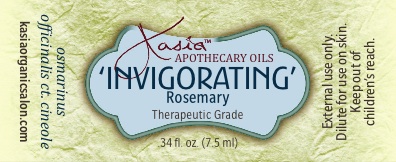
Among their many healing properties, rosemary and pepperment essential oils are said to help improve memory, relieve headaches, soothe sore muscles, ease digestion, clear nasal passages, tone the nervous system, enhance circulation, invigorate the body and alleviate depression.

Diffusing A few drops of rosemary essential oil in our diffuser helps fight off fatigue, ease breathing and clear your mind.

Body and Bath Oil When added to the bath or mixed with a carrier oil (such as jojoba oil) helps soothe aching muscles, improve circulation and digestion, stimulate the lymphatic system, treat liver and gall bladder disorders, ease arthritis and clear up skin conditions such as eczema, acne, rashes and varicose veins.

Hair Care As a scalp treatment, Rosemary helps fight dandruff, stimulates the scalp, slows down the graying process and encourages hair to grow. Its astringent properties help combat oily hair.

Learn more about Kasia Apothecary Oils HERE!

// User Icon Setting (may be set to BLACK, WHITE or NONE):