Underlying cause of bags and dark circles and.. what causes wrinkles?

Mr. Golden Sun and Mr. Pollute, what have you done for me lately?

Research suggests that the sun is what causes wrinkles and 80% of all of the signs of aging and the other 20% of the signs of aging are caused by toxins and environmental damage.

Free of artificial preservatives, parabens, or other harfmul ingredients, Kasia onCure takes the efficient, but safe approach to treating under-eye wrinkles and the other signs of aging.

The eye area is one of the first regions of the face to show the signs of ageing. The skin around the eyes is deprived of oil glands and is very delicate and that’s why the skin doesn’t have a protection against the environments influences and UV rays.

Other underlying cause of bags and dark circles is poorly circulating fluids due to weakening capillaries.  You can improve the strength of those capillaries, with the right nutrients internally, as well as applied directly in order to quickly get rid of wrinkles, bags and circles.

There is More!

To get rid of eye wrinkles, you also need to stimulate the production of collagen and elastin.  Kasia onCure delivers amino acid protein peptides that have been proven scientifically to help you do just that.

Kasia OnCure Eye Cream

Benefits:

* Reduces dark circles, shadows and fine lines. * Prevents puffiness and reduces eye bags. * Reinforces firmness and tone.

Beneficial Ingredients

Prunus Armeniaca (apricot) Kernel Oil

Commonly referred to as Apricot Kernel Oil, this oil is pressed from the kernels of the Apricot fruit. It is rich in essential fatty acids, which are vital components of the human organism. As a result, this nourishing oil helps to replenish and rebuild the skin

Borago Officinalis (borage) Seed Oil

Used to prevent aging and wrinkles by fighting dehydration and the loss of skin elasticity. Borage also stimulates skin cell regeneration and rejuvenation, and is rich in minerals and linoleic acid.

Butyrospermum Parkii (shea) Butter

Kasia chooses shea butter for it’s unique fatty acid profile, which gives the ability to moisturize and retain the elasticity of the skin.

Chrysin
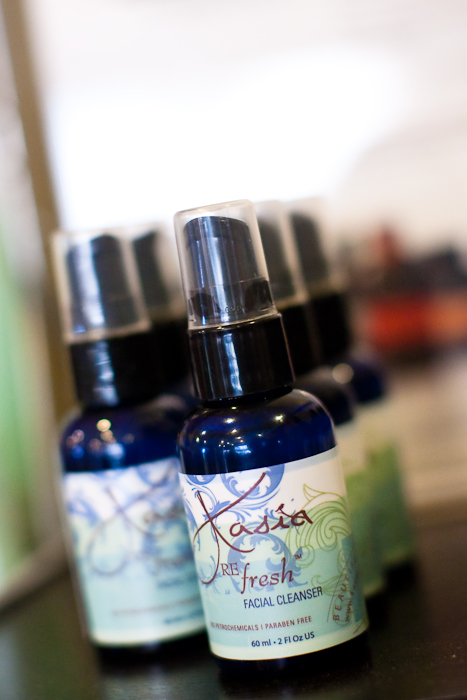
Chrysin is a naturally occurring flavone, extracted from the blue passion flower.  It promotes the elimination of blood originating pigments from under the eyes. Chrysin eliminates the by-products of hemoglobin degradation, which aids in reducing the appearance of dark under eye circles.

Palmitoyl Tetrapeptide-3

Kasia trusts this protein will bring direct action to noticeably reduce under eye puffiness in four weeks. This product is clinically proven to help correct poor drainage by increasing the lymphatic exchange and achieving proper circulation of the extra cellular fluids. This powerful peptide counteracts skin slackening, perking up and increasing the firmness of the fragile skin area around the eye.

It also decreases irritation that could lead to puffiness.

he skin around the eyes is very delicate and sensitive, and that’s why you should use special eye creams or gels that are specifically made for the delicate eye area. Most of them contain ingredients that relax the muscles, vitamins, retinol and collagen.

Other tips for treating wrinkles

* Always apply sunscreen, especially during the summer months

* Avoid using creamy eye shadows- they may seep into your fine lines and accentuate them even more

* Get plenty of sleep

* Drink lots of water, at least 1.5 liter

* Wear hats and black sunglasses especially during the summer

* Avoid smoking – it makes you squint and deprive your skin from “air”

* Take vitamins and eat lots of vegetables and fruits

Kasia fit right in with the changes I have been making in my life over the past few years to put better things both in and on my body.  The fact that Kasia skin care was so "clean" was a big deal to me, but the way the product worked sealed the deal for me!  I started with the eye cream as I have always had dark circles under my eyes and was not happy with how deep my "smile lines" were at my eyes.  In a matter of a couple of weeks the dark circles were gone!

I am still on my first bottle (very economical!!) and I have noticed that my "smile lines" are not as deep as they once were!  I have recommended this fabulous eye cream to many of my friends after the great results I have seen using it twice a day!

Susan E

DONT FORGET THE SUNSCREEN!

LAUNDRY LIST of toxins Kasia berry-fresh SOAP NUTS can save you from!

Let's get down and dirty ... about your laundry habits.   Below are SOME of the chemical-filled ingredients  of regular detergents  -  you could be affecting your health -- as well as the health of waterways downstream.

Kasia Soap Nuts are here to save the day, and your checkbook!

Ammonia Free o Animal Ingredient Free o Benzene Free (Benzene exposure has serious health effects. The short term breathing of high levels of benzene can result in death, while low levels can cause drowsiness, dizziness, rapid heart rate, headaches, tremors, confusion, and unconsciousness.) o Biodegradable o Boron Free o Butyl/Ethyl Cellosolve Free (Some animal studies indicate that it produces reproductive problems, such as reduced fertility, death of embryos and birth defects.[2] People exposed to high levels of 2-butoxyethanol for several hours have reported nose and eye irritation, headaches, vomiting and a metallic taste in their mouths. In addition to inhaling 2-butoxyethanol vapor, research has shown that skin can also absorb 2-butoxyethanol vapor from the air, making skin a major pathway of exposure to this chemical.) o Chlorine Free (Chlorine is a toxic gas that irritates the respiratory system. Because it is heavier than air, it tends to accumulate at the bottom of poorly ventilated spaces. Chlorine gas is a strong oxidizer, which may react with flammable materials.) o Diethylene Ether Free (1,4-Dioxane is a known eye and respiratory tract irritant. It is suspected of causing damage to the central nervous system, liver and kidneys.[3] Accidental worker exposure to 1,4-dioxane has resulted in several deaths.[4] Dioxane is classified by the IARC as a Group 2B carcinogen: possibly carcinogenic to humans because it is a known carcinogen in animals.) o Dye Free o Formaldehyde Free (Formaldehyde solutions are used as a fixative for microscopy and histology. Formaldehyde-based solutions are also used in embalming to disinfect and temporarily preserve human and animal remains.) o Isopropanol Free (Isopropyl alcohol is oxidized by the liver into acetone by alcohol dehydrogenase. Symptoms of isopropyl alcohol poisoning include flushing, headache, dizziness, CNS depression, nausea, vomiting, anesthesia, and coma. Use in well-ventilated areas and use protective gloves while using. Poisoning can occur from ingestion, inhalation, or absorption.) o Kerosene Free (Kerosene is widely used to power jet-engined aircraft (Jet fuel) and some rockets, but is also commonly used as a heating fuel and for fire toys such as poi.) o Mineral Spirit Free o Never Tested On Animals o Non-toxic o Petrochemical Free (Petrochemicals are chemical products made from raw materials of petroleum or other hydrocarbon origin.) o Phosphate Free (A phosphate, an inorganic chemical, is a salt of phosphoric acid.) o Phosphoric Acid Free (Phosphoric acid, used in many soft drinks (primarily cola), has been linked to lower bone density in epidemiological studies.) o Propylene Glycol Free (Eye - Causes mild eye irritation. Contact may cause irritation, tearing, and burning pain. Skin - Causes moderate skin irritation. Contact with the skin may cause erythema, dryness, and defatting. Ingestion - May cause gastrointestinal irritation with nausea, vomiting and diarrhea. Low hazard for usual industrial handling. May cause hemoglobinuric nephrosis. May cause changes in surface EEG. Inhalation - Low hazard for usual industrial handling. May cause respiratory tract irritation. Chronic - May cause reproductive and fetal effects. Laboratory experiments have resulted in mutagenic effects. Exposure to large doses may cause central nervous system depression. Chronic ingestion may cause lactic acidosis and possible seizures.) o Sodium Lauryl Sulfate Free (SLS can be converted by ethoxylation to sodium laureth sulfate (sodium lauryl ether sulfate; SLES), which is less harsh on the skin, probably because it is not as much of a protein denaturant as is the unethoxylated substance.) o Sulfuric Acid Free (Although sulfuric acid is non-flammable, contact with metals in the event of a spillage can lead to the liberation of hydrogen gas. The dispersal of acid aerosols and gaseous sulfur dioxide is an additional hazard of fires involving sulfuric acid.)

Leading Laundry Cleaning Brands in Stores Ingredients

Consumers have become much more concerned about how the products they use impact the environment in recent years. Unfortunately, it can be difficult for even highly educated consumers to find out just what ingredients are in certain products, and how they might impact the environment.

Take the leading brand laundry detergents. You certainly won't get a straight answer by looking at the ingredients label, where you typically find the following cryptic message: "Ingredients include surfactants (anionic and nonionic) and enzymes."

We cannot provide you with specific ingredients used in Tide or other name brand laundry detergents, for a couple reasons. First of all, companies are not required by law to list their ingredients, and claim that their formulations are confidential. Secondly, the ingredients they use change periodically, whether due to reformulation or simply the use of alternative ingredients to reduce costs. However, the following list of ingredients commonly used in the leading brands, along with a description of how they impact the environment, should give you a good idea of what's really inside: Alkyl benzene sulfonates or ABS (also linear alkyl benzene sulfonates or LAS, linear alkyl sodium sulfonates).

A

class of synthetic surfactants (usually identified as "anionic surfactants.") ABS are very slow to biodegrade and seldom used. LAS, however, are the most common surfactants in use. During the manufacturing process, carcinogens and reproductive toxins such as benzene are released into the environment. While LAS do biodegrade, they do so slowly and are of low to moderate toxicity. LAS are synthetic. The pure compounds may cause skin irritation on prolonged contact, just like soap. Allergic reactions are rare. Because oleo-based alternatives are available, LAS should not be used.

Alkyl phenoxy polyethoxy ethanols (also nonyl phenoxy ethoxylate or nonyl phenol).

This is a general name for a group of synthetic surfactants. They are slow to biodegrade in the environment and have been implicated in chronic health problems. Researchers in England have found that in trace amounts they activate estrogen receptors in cells, which in turn alters the activity of certain genes. For example, in experiments they have been found to stimulate the growth of breast cancer cells and feminize male fish. One member of this family of chemicals is used as a common spermicide, indicating the general level of high biological toxicity associated with these compounds.

Artificial fragrances

Artificial fragrances are made from petroleum. Many do not degrade in the environment, and may have toxic effects on both fish and mammals. Additionally, they often can cause allergies and skin or eye irritation.

Diethanolamines (also diethanolamine, triethanolamine and monoethanolamine).

A synthetic family of surfactants, this group of compounds is used to neutralize acids in products to make them non-irritating. Diathanolamines are slow to biodegrade and they react with natural nitrogen oxides and sodium nitrite pollutants in the atmosphere to form nitrosamines, a family of

potent carcinogens.

EDTA (ethylene-diamino-tetra-acetate).

A class of synthetic, phosphate-alternative compounds used to reduce calcium and magnesium hardness in water. EDTA is also used to prevent bleaching agents from becoming active before they're immersed in water and as a foaming stabilizer. EDTA does not readily biodegrade and once introduced into the general environment can re-dissolve toxic heavy metals trapped in underwater sediments, allowing them to re-enter and re-circulate in the food chain.

Optical brighteners

Optical brighteners are a broad classification of many different synthetic chemicals that, when applied to clothing, convert UV light wavelengths to visible light, thus making laundered clothes appear "whiter." Their inclusion in any formula does not enhance or affect the product's performance in any way; they simply trick the eye. Optical brighteners do not readily biodegrade. They are toxic to fish when washed into the general environment and can create bacterial mutations. They can cause allergic reaction when in contact with skin that is then exposed to sunlight. Most optical brighteners are given trade names which consumers are unlikely to see on a label.

Petroleum distillates (also naphthas).

A broad category encompassing almost every type of chemical obtained directly from the petroleum refining process. Any ingredient listed as a "petroleum distillate" or "naphtha" should be suspect as it is, firstly a synthetic and, secondly, likely to cause one or more detrimental health or environmental effects.

Phosphates

A key nutrient in ecosystems, phosphates are natural minerals important to the maintenance of all life. Their role in laundry detergents is to remove hard water minerals and thus increase the effectiveness of the detergents themselves. They are also a deflocculating agent; that is, they prevent dirt from settling back onto clothes during washing. While relatively non-irritating and non-toxic in the environment, they nonetheless contribute to significant eutrophication of waterways and create unbalanced ecosystems by fostering dangerously explosive marine plant growth. For these reasons they are banned or restricted in many states. Products containing phosphates should be considered unacceptable.

Note: The major laundry detergent manufacturers no longer use phosphates in their formulations.

Polycarboxylates

Similar in chemical structure to certain plastics and acrylic compounds, these are relatively new, synthetic phosphate substitutes. Because they are recent additions to the consumer product chemical arsenal, however, their effects on human and environmental health remain largely unknown. Though tests show they are non-toxic, do not interfere with treatment plant operation and generally settle out with the sludge during water treatment, until further study and analysis are conducted, use of this ingredient is not recommended. Further, they are not biodegradable and are petroleum based.

Polyethylene glycol (also PEG).

Another type of anti-redeposition agent, PEG is a polymer made from ethylene oxide and is similar to some non-ionic detergents. Not considered toxic, it takes large doses to be lethal in animals. However, PEG is slow to degrade and is synthetic.

Quaternium 15

An alkyl ammonium chloride used as a surfactant, disinfectant and deodorant that releases formaldehyde, a potent toxin.

Xylene sulfonate

Reference:  ezine articles Amie_Siu

Ask the Nurse: Vitamin D

I keep reading about the importance of Vitamin D.  How much should I be taking and can I take too much?

The importance of Vitamin D is often overlooked.  We get Vitamin D from the sun, but for those of us who live in Minnesota and for those who use sunscreen regularly, you can be certain that your Vitamin D level is not high enough.  Current research has implicated Vitamin D deficiency as a factor in many forms of cancer, heart disease, autoimmune disease, depression, osteoporosis and many other illnesses.  There is no way to know for certain if you are deficient unless you check a 25-hydroxyvitamin D blood test.  Levels should be between 60-90 ng/ml all year.  In the Midwest we typically see levels decline in the winter and spring because of the low level of the sun and lack of skin exposure.   It is impossible to know how much Vitamin D3 or cholecalciferol (not D2 or ergocalciferol) you need to take to maintain a healthy level.  Many individual factors determine our needs including age, weight, skin coloration, and genetics to name a few.  I would recommend that you start a good quality Vitamin D3 supplement at 5000 IU per day.  After 2-3 months you should have your level checked.  Then adjust your dosage until you attain a level between 60-90 ng/ml.  You may need to do this at the end of fall and the end of spring to know what dosage to use each season.  It is rare to take too much although, like any medication, it is possible to become toxic if taking very high doses for long periods of time.  I wouldn’t recommend using levels above 10,000 IU daily without regular testing and follow up with someone experienced in Vitamin D deficiency management.  A good database of Vitamin D research can be found at www.vitamindcouncil.org .

Reference:  Julie Tebben RNC, WHNP Nurse Practitioner -- Ms. Tebben is an experienced certified nurse practitioner with advanced training in functional medicine and application of bioidentical hormones. Her focus in on women's health, age management, and the functional management of chronic illlness.

Kasia Essential Oil and Home Remedies for Hair Loss and Growth!

Hair loss is a common problem faced by both women AND men ....and one that we address   often at Kasia Salon. We do this by our partnership in home care, and also provide a referal list for advance hormone testing, etc.

In this short read, learn more of why this problem occurs and some effective natural home remedies you can use to overcome hair loss.

Main Reasons

There are multiple  factors which can contribute to hair fall but the main ones are generally hormone products (and lack there of),  depression, side effects of some medications, toxicity (build up)  uncleanness, stress and sometimes it is genetic in nature. Scientifically,  the problem occurs due to excess production of DHT  in the body.

STOP! If you notice your hair falling at a rapid pace then it is very important to start the healing process as soon as possible to limit any further damage. At Kasia all clients go home with a customized blend of oils with Jojoba Oil to start this process.

The following are some tested home remedies you can easily initiate!

1. Use Jojoba Oil and Essential Oil of choice to  massage your head scalp within the evening before going to bed.   This will help in strengthening of the hair follicles, stimulate cellular energy, and make your hair healthy.

2. Shampoo?  Keep your hair clean with non-surfactant, or conventional hair products.  Key is: Keep build up off the hair follicle!  By avoided these harsher products you also decrease harmful chemicals which make the hair thin and weak.  Our focus as Kasia Organic Salon is to build the hair and scalp back up in daily  nourishment.

3.  Supplementation for hair loss is also a large part of this process.  Omega/Essential Fatty Acids, B Vitamins, and Probiotics help imensely.  Kasia LOVES Immuno-viva CORE and Probiotic + for cellular metabolism, nourishment, and gut health. This will also help in lowering dht levels in the body thereby helping in combating hair loss.

4. Stress Less!  Be sure to receive self care and adequate sleep, drink plenty of water, helping flush out all harmful toxins from the body - hence giving you healthier skin and hair.

Recommended Hair Loss Essential GC/MC Certified Organic Oils at Kasia that.... WE LOVE LOVE LOVE:

Kasia Jojoba Oil and EO Quick Treatment Guide

Directions:  Mix 1oz with total of 10 drops of single/blend essential oils.

Dandruff:

Tea Tree, Chamomile, Rosemary, Ylang-ylang

Dandruff-prevention blend:

Lavender,  tea tree, rosemary, rops ylang ylang, 1/2 ounce jojoba oil.

Alopecia/Hair Loss

Lavender, Rosemary, Cedar Wood

Dry Hair

Lavender, Rosemary, Rosewood, Geranium, Sandalwood

Oily Hair Lemon, bergamot, juniper, rosemary, thyme, or ylang-ylang

Normal Hair Juniper, rosemary, lavender, geranium, clary sage

It could take at least 3 to 6 months or even longer for hair to grow back and scalp health improvements to be noticed.

The Difference in teen ACNE versus adult ACNE

The first of the two big differences between acne in these age groups is location.Teenagers tend to have breakouts on the forehead, nose, cheeks, and chin, while adults tend to have breakouts around the mouth, chin, and jaw line.

The second major difference is the underlying condition of the skin. Adult skin is usually weaker and more damaged than teen skin. That means adults with acne need to simultaneously address both the symptoms of acne and the symptoms of aging, such as fine lines, wrinkles, dryness, and uneven skin texture. Products made for teens often irritate fragile adult skin and actually accelerate the appearance of aging.

For patients experiencing adult acne, I recommend a treatment that takes into account all three components of my inclusive health philosophy—internal, topical, and emotional self-care. Internal care means eating healthy, nutrient-rich foods and taking supplements to protect and promote cellular integrity, which improves all systems in the body, including the skin—its largest, most visible, and most connected system. Eating foods rich in vitamin A—such as apricots, shiitake mushrooms, sweet potatoes, and mangoes—increases cellular turnover and helps keep pores clear. Topically, it’s important to use products that treat both acne and aging concerns. In addition, there are steps you can take to lower your skin’s exposure to irritating bacteria: regularly changing out pillowcases and towels, replacing makeup sponges often, and gently washing skin with lukewarm water (scrubbing or using hot water will lead to additional irritation).

Reducing stress by maintaining a healthy connection with friends and family and structuring a positive social environment will help address your emotional self-care.

Focusing on the whole body helps target and eradicate one of the root causes of adult acne—cellular weakness. By optimizing your internal, external, and emotional environments, your population of cells will be younger and stronger, which will help to rapidly resolve adult acne.

Howard Murad, M.D., is an associate clinical professor of medicine at UCLA, the founder of Murad In , and the author of the upcoming book The Water Secret: The Cellular Breakthrough to Look and Feel 10 Years Younger (September 2010, Wiley).

Why is the Ammonia-Free Hair Color at Kasia a better product in terms of safety?

Yes, primarily the formulation does not use Ammonia (Ammonium Hydroxide) and Ethanolamines (including mono-ethanolamine or MEA, diethanolamine or DEA) as alkaline agents.

At Kasia Salon, phone calls come in daily of a growing number of reactive/allergic coloring guests.  It's "no wonder...."  Ammonia is a strong irritant to skin and the respiratory system, while added ethanolamines which is a milder irritant is also a known toxicant to internal organs and a carcinogen. Source: CosmeticsDatabase.com

Secondarily, as a shared philosophy in our Hamadi/other  products, there is a ZERO tolerance of industrial compounds such as propylene glycol (mineral oil), PEG's or synthetics, and sulfates, etc.

What about PPD? (P-phenylenediamine)

NO WAY!  There is no ppd for your added safety.  However, people who are sensitive or allergic to ppd have a high probability of reacting to its related dye compounds.

We offer a free patch test that we suggest to administered at least 48 hours before the very first color service.

Natural .... Organic hair color...Really?

Well, let's get this clear - the color is made of natural ingredients and organic chemical compounds.  Being VERY hesitant in engaging in false advertising like other "natural" or "organic" brands.

Sure, other ingredients cam are organically grown, but the dye pigments of any permanent hair color are not made from living plant material.  They are synthetic organic compounds.   If somebody ever invented a hair dye system derived from living plants that can lift and deposit colors consistently and cover gray hair uniformly, it will HUGE industry news and licensing in new technology.  In a billion dollar market, this would ride on the scale of the TV or the I-Phone!

Top 10 Toxic Ingredients for the Informed Beauty!

Hey Informed Beauty! You may not be aware of is that those same products you use to enhance your God given beauty may be causing serious effects on your health.

These are just a few of the top potentially toxic ingredients that can be found in your every day cosmetics.

1. DEA, TEA, Diethanolamine, Triethanolamine:Emulsifier and/or foaming agent.  Skin sensitizer, can form carcinogenic nitrosamine compounds in the skin or body after absorption if mixed with nitrosating agents.  A respiratory toxin, neurotoxicity hazard and immunotoxicity hazard.

2. Dibutyl Phthalate, DBP: Possible reproductive or developmental toxin, potential endocrine disruptor, skin sensitizer, immune system toxin, gastrointestinal or liver toxicant, kidney toxicant, and neurotoxin. The European Union has found it to be dangerous for the environment, very toxic to aquatic organisms and has banned it from use in cosmetics. The EPA Water Quality Standards Database states it is a priority water pollutant under the Clean Water Act and a hazardous air pollutant under the Clean Air Act.

3. Formaldehyde, Formalin: EWG lists it as a known human carcinogen, skin and lung sensitizer, gastrointestinal or liver toxicant and neurotoxin.

4. Parabens, alkyl parahydroxybenzoate, butylparaben, methylparaben, ethylparaben, propylparaben, isobutylparabens: Widely used as a preservative in cosmetics.  Have been assessed as hormonally active, possible endocrine disruptor, skin sensitizer and skin or sense organ toxicant. Recents scientific studies in the U.K. found a strong link between parabens and the increasing rate of breast cancer in women, Researchers found a high concentration of paragons in tumors tested.

5. Petrolatum, petroleum jelly: Emollient or lubricant.  Potentially contaminated with impurities linked to cancer or other significant health problems. The European Union has banned petrolatum from use in cosmetics.

6. Propylene Glycol, Proptylene Glycol, 1,2-Propanediol. Related synthetics: PEG (polyethylene glycol) and PPG (polypropylene glycol):  Used as humectants (to retain moisture).  Penetration enhancer, which alters skin structure, allowing other chemicals to penetrate deeper into the skin, increasing the amounts of other chemicals that reach the bloodstream.  Suspected respiratory toxin, immunotoxicity and neurotoxicity hazard.

7. Sodium Lauryl/Laureth Sulfate, Sodium Lauryl Sulfate, Sodium Lauryl Ether Sulfate, Anhydrous Sodium Lauryl Sulfate, Irium: Used as a surfactant (makes it foamy).  Penetration enhancer.

8. Talc, Talcum: potentially contaminated with harmful impurities linked to cancer or other significant health problems and a respiratory toxicant. Scientific studies have shown that routine application of talcum powder to the genital area is linked with a three-to-four  fold increase in the development of ovarian cancer.

9. 1,4-dioxane: A carcinogenic contaminant of cosmetic products. Almost 50% of cosmetics containing ethoxylated surfactants were found to contain dioxane. May exert its effects through inhalation, skin absorption, and ingestion.

10. Isopropyl Alcohol: Alcohol is used as a solvent in many skin care products. It causes skin irritation and also strips the skin of its natural acid promoting the growth of bacteria, moulds and viruses. It may also cause premature aging of skin.

Next time you go shopping for cosmetics or skin care products PRINT and POCKET our TOP TEN CARD in your purse, and please......take a few moments to read the labels.

Resource: http://www.naturalcosmeticnews.com/category-2/top-10-potentially-toxic-ingredients-in-cosmetics/

Newsletter: Summer Trends + Take advantage of Fathers Day Special!

Kasia Organic Salon
Dear kassie,

EVERYBODY has been curious.... we've already sold over 15 POUNDS of  Soap Nuts THIS WEEK ALONE, but  many are still skeptical ...

As a new  concept  Kasia So-Berry Fresh USDA Soap Nuts are truly a timely rediscovery both economically (.10 versus .37 per load = 50% savings) and environmentally  for multi-purpose "green cleaning."

Multi-purpose -- not just your laundry?  You can actually boil them in water to form a liquid, which is used to clean dishes, counter tops, and floors!

In a pinch?  "I have run out of my dish washing soap and can't get to the store right away.....  It's great to know that having that large bag of soap nuts means I can clean just about anything in my business to home."

I personally started using soap nuts exclusively about two years ago and have never looked back.  Bonus * Using them at Kasia Organic Salon will save us over 50% savings this year in laundry/cleaning supply.  We simply love them.

Sneak a "Dad Special" in for YOU!

Save 20% w/ Purchase of any Hamadi Shampoo!

soPure Clarifying Mask exfoliates and moisturizes your skin to keep it looking healthy and young.  With all-natural ingredients, this mask evens skin tone and is the perfect way to pamper your skin.

  • Helps reduce pigmentation and discoloration.
  • Dual exfoliate system with jojoba bead and larch extract.
  • Deep hydration with long lasting effects

Heat-Proof  Summer Style

Take it to the side, messy, French, fishtail and other infinite types braids and lead the trend of the most beloved hair styles for the summer! The key to great summer braids is to keep the braids loose and flow-worthy!   Try using clear hair bands and bobby pins to keep the braids in place.

Picture  4GET MESSY!   To achieve this look you want to scrunch your hair first with Hamadi Leave In Conditioner or Cream curl enhancing  Lotion while your hair is damp, diffusing until its completely dry.

Then loosely pull your hair to the side, letting the shorter pieces fall out, taking bigger sections braid hair on the side and tie at the bottom leaving an inch or two of unbraided hair to show the wave.

Come on by Kasia for a free consultation on how to get great braids from one of our experienced stylists!

BIG TOPICS of Recent at Kasia!

Healthy Scalp = Healthy Hair Growth

My clients often ask me about potential hair loss when they notice their hair shedding. If I've seen it once, I've seen it all....and Kasia Salon is committed to creating options for you! "Ugh, Hair Loss...." The truth is, a certain amount of hair loss is normal (anywhere from 50-100 strands per day), but excessive hair loss and hair thinning indicates that something is not right. The causes of accelerated hair loss are very individual and depend on a complicated set of factors, including hormonal and metabolic imbalances, emotional stress and nutritional deficiencies.

Unfortunately many conventional doctors downplay hair loss as an inevitable part of aging for both sexes, treating it with topical products like Rogaine that enhance existing hair but offer no real solution to the causes of hair loss, and therefore no prevention of continued hair thinning. Life cycle of a hair follicle

Why do certain hair follicles break their normal cycle and switch into a resting or "off" position - temporarily or permanently? And why do some women experience thinning hair on their head and darker thicker hair on other parts of their bodies? The reasons are highly individual, but can include any combination of the following:

  • Stress (emotional and physical)
  • Hormonal imbalance, specifically androgen sensitivity
  • Genetics
  • Immune system irregularities
  • Thyroid disorders
  • Nutritional deficiencies (especially iron or vitamin A)
  • Cosmetics (allergies and harsh treatments)

Nutrition Kasia believes in first hitting the inside out in proper nutrition. In countries where vegetables are primary in the diet, hair loss is rarely ever seen. Catalysts like single or complex B vitamins in particular are helpful with scalp sebum and new cell generation, necessary for healthy hair growth. Some minerals work with others to ramp up antioxidant activity and block bad enzymes.

Learn more about Hair Loss Solutions!

Health + Essential Oils & Jojoba Oil Therapy, Custom Blends! + Book and consult about our NEW SERVICE in EXTENSIONS!! Let's talk about the options...you DO HAVE!

Read  more about the TOP Real Causes of Hair Loss HERE!

Message

$20 OFF your first Hair Color, Organic Facial, or Massage!
Suggest a time and Book ONLINE!

612 824 7611

Congrats to... Melissa, Sara, Jason, Colette, Jillian, Amy, and Robyn on your SUMMER 10 Day Cleanse!

"Kassie!  Everything went GREAT!   I didnt feel hungry as long as I was eating at the appropriate times. It required planning and preparedness everyday to have the right foods to eat for all meals, but I think we were all very sucessful!

I definately lost some weight and people commented on that said I looked great.  The best thing was how good I felt during and after.  I have to say, the medical food really helped!"

-Melissa, from guided 10 Day Cleanse

Upcoming Event Lymphatic Cleansing. Reshaping, and Posture Correction ALL-In-ONE!

THIS Monday, 21st   at  6:30 pm

RSVP Here!

822 West 50th St Minneapolis, Minnesota 55419

// User Icon Setting (may be set to BLACK, WHITE or NONE):