Whether you are growing your locks out or maintaining your recent professional cut from Kasia, there's no hair enemy as fierce as the dreaded split ends.
The Kasia Hair Team can agree that the number one complaint of clients when coming in for a cut are their frazzled ends. Old or young, chemically treated strands or your savaged natural hue, you stand at risk of experiencing this science.
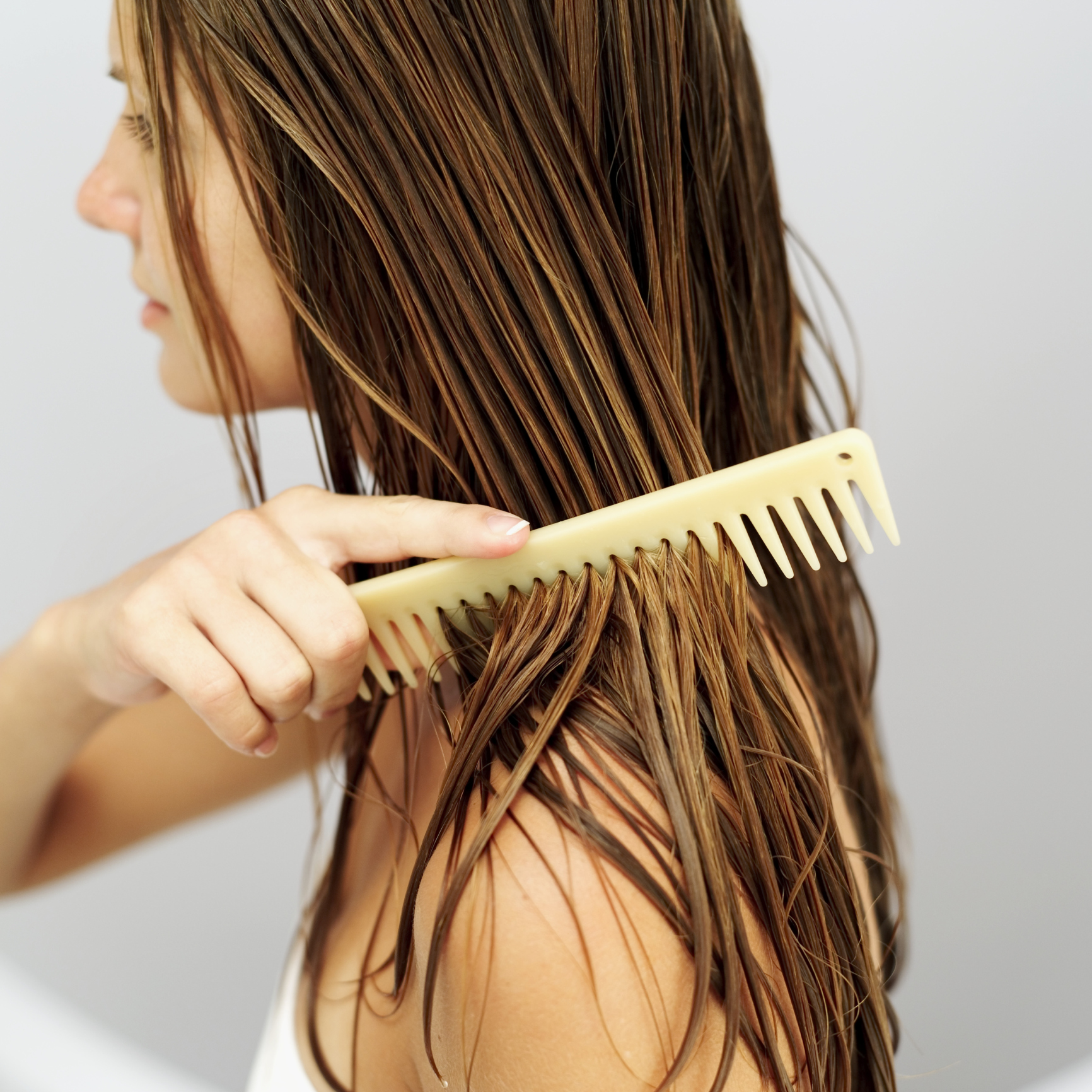
"Split ends occur when the outer protective layer of the hair cuticle wears away because of external stressors such as heat styling, excessive pony tails, environmental stressors and chemically derived products that break the hair down over time,” explains Kassie, owner and stylist at Kasia Organic Salon.
There is no return back once the internal structure of the hair is exposed, it becomes weak, thirsty and damaged, resulting in split ends,” says Kassie.
The Way
While there is one road to ridding your luscious locks beaten up ends in having them snipped off, there are several ways to nurture your noggin’ between salon appointments to improve the look of damage and prevent more splits from occurring.
Condition and spread: Apply Kasia Weighless Conditioner or Restore Hair Oil Treatment in the shower, slowly run a wide-tooth comb through hair until all the tangles are out. This prevents the harsh pressure and breakage that results from trying to brush out hair that is roughed up from a towel-dry.
Mind your heat tools: The cheap blow-dryer or half off flat iron that barely heats up may be a tempting snatch, but inexpensive tools tend to dangerously overheat over time and burn ends into splits. Do your homework and use a brand recommended by a pro.
Be gentle: Treat your hair as a well-worth asset! Just like the new suite you purchased, it will last longer and look better as you present yourself to the world
Use as natural and non-chemcially derived products as possible to achieve a long term health and shine to your locks.
Get your Omega’s, Protein, folic acid and biotin: Nutrients literally build the proteins that make up your hair strands. B vitamins folic acid and biotin of in particular, have been shown to supplement hair health, length and thickness.
Folic acid helps the production of red blood cells, which powers the growth of hair. Foods rich in folic acid include green leafy veggies, oranges, soybeans and wheat. Biotin strengthens both hair and nails through its metabolism of fats, carbs and proteins. Brown rice, lentils, peas, sunflower seeds, walnuts and soybeans are all rich in biotin.
Antioxidants give you the anti aging protection against the diseases and help slow down the aging process of your skin, cells, tissues and organs. The main antioxidants found in food include vitamins A, C and E, the minerals selenium and zinc and all of the phytonutrient carotenoids. Antioxidants keep free radicals from ravaging your body and stealing the life from your cells.
Critics used to claim there was no evidence that topically based products affected skin aging. Over the years, a remarkable number of published studies have proven these skeptics wrong! Science clearly substantiates the role that free radicals play in causing skin aging and the fact that topically applied antioxidants confer significant protection and can even partially reverse some aspects of skin aging. Indeed, various animal and human studies have proven that low molecular weight antioxidants, especially vitamins C and E, as well as alpha-lipoic acid exert protective effects against free radical damage (oxidative stress) (Podda et al. 2001).
Essential Fatty Acids offer anti aging benefits to dry skin, hair, and nails. EFA’s will give your body the nutrients it needs for smooth, glowing skin and healthy hair and is even known to help balance hormones.
Fatty Acid (Omega 3) anti-aging benefits and reduction may be directly linked to cell inflammation. They help to keep the cells healthy and reduce the inflammation that may occur in the cell when omega 6 levels are too high.
Use leave-in conditioner or treatment oil: A leave-in conditioner will add extra protection that stays on strands as you heat and style your hair. Consider Kasia Restore Hair Oil Treatment, which you apply after every wash on towel-dried hair for best results.
Sunflower oil (comprised in Kasia Restore Hair Oil) contains fatty acids and are essential to hair health and effective in preventing hair loss from male and female pattern baldness and alopecia areata.
Lastly, get regular cuts: As stated, a good cut is the only way to fully get rid of split ends, regular trims provides the best protection against them. The longer you wait, the greater your split ends will make way up the shaft. It might sound oxy-moronic, but hair that remains the healthiest are those that receive frequent trims. Especially if you're trying to grow longer, healthier hair. The Kasia Organic Salon Hair Team suggests getting a cut or trim at least every six to eight weeks.
______
Kasia Organic Salon provides beautifying services with a side of environmental awareness. Put your eco-conscience and its cranial encasement at ease during your services at Kasia.
The former nurtures noggins with customized blends of essential oils, repairing damaged follicles while helping to prevent dandruff, some hair loss, and scalp irritation.
With the health of your head restored, a skilled scissor shaman will get to work on the style. We are devoted to designing looks that let each client's personality shine through, so whether you are fun and flirty, serious and sophisticated, or enraged and enamored, you'll leave the salon with a 'do' to match your personality.


 There are man stages and nuances in weight loss to truly be effective and sustainable.


 The Areca Palm is the indoor plant that outputs the most humidity. It releases copious amount of moisture into the air, removes environmental toxins, and is tolerant of indoor spaces. Definitely one of the most useful houseplants out there!

 The Reed Palm has the ability to survive in relatively low light, but may grow several feet tall, especially in a brighter location. This palm does best in reasonably warm temperatures. Keep them away from leaky windows and cold entryways where they'd be exposed to blasts of frigid air.
 The Dwarf Date Palm or “Phoenix” Palm has been proven effective at removing formaldehyde in the air. It has a solid history as a houseplant and amongst the most durable of all palms. In a pot-bound situation, this palm continues to be beautiful for many years.
 The Boston Fern also removes formaldehyde in the air. It requires more sunlight than the previous ferns. Place your Boston fern near a window that receives plenty of indirect sunshine. They can endure dimly lit locations, but they won't flourish and grow. Boston ferns prefer daytime temperatures that range from 65°F to 75°F. Evening temperatures should be a little cooler.
  The Janet Craig Dracaena is widely used in the interiors of homes. They are available in bush form (pictured), cane form and occasionally as a braided tree. Plants are available from small starter plants to eight foot tall. Proper watering is the trick to keep this plants full appearance. Set dracaenas in low light and water sparingly allowing the top several inches of soil to dry down. Dracaenas do not like fertilizer... only feed annually.
 English ivy has been proven effective in removing airborne-mold and feces by a significant amount as well as formaldehyde. If you have indoor pets, you should consider placing this plant by any litter boxes or cages in your house. It can also be planted outside for benefits to outdoor pet owners, but be aware that this plant has the ability to overrun any area that it’s set in. Most cultivars of ivy grow best in bright light, but not direct sun. There are hundreds of cultivars of this popular ivy. It is an incredibly varied group, with leaves from well under an inch to over 3 inches long and in many colors and shapes.
 Australian sword fern is a good choice. This plant looks very attractive in your office, home or garden. They do well in pots or in hanging basket plants. This is a vigorous grower, and the sword shaped leaves remain sturdy in windy areas. They grow to about 24-36 in. This plant requires
  The Peace Lily (Mauna Loa) removes benzene, xylene and toluene found in nail polish, paints, solvents, and adhesives as well as TCE. Peace lily will flourish in almost any well-drained potting mix. Peace lily will survive low interior light but would prefer bright filtered light. Peace lily should not be placed in direct sun or it will sunburn. These plants need very little fertilizer. You can plant it directly in water with a beta fish to feed on the roots for a more interesting setting. Wash the leaves occasionally to prevent insect attack.
 Rubber plants can easily grow 6 to 10 feet tall or more indoors if there is enough space. They can be pruned to reduce their size. They grow best with the morning light from an east window. They do well in warm to average room temperatures. Water rubber trees thoroughly, but let the soil dry somewhat between waterings. The soil mix should be a well-drained houseplant mix. Wash the leaves with water when they get dusty to keep them attractive and help your plant stay healthy. .
 Weeping figs are usually sold as 3-to 6-feet potted trees or bushes. They can grow as tall as allowed indoors, but they are easily pruned to a suitable height. Weeping figs grow best in bright indirect or curtain-filtered sunlight. They will handle some direct sun if the humidity is high. Variegated cultivars grow best in somewhat lower light. Weeping figs prefer warm temperatures. Night temperatures of 65 to 70 °F and day temperatures of 75 to 85 °F are ideal. During periods of active growth, keep the soil evenly moist. The soil should be allowed to dry slightly between watering.