Functional Medicine

Beautiful Health * Detox Introduction

Have you ever felt you body not feeling right?  Fatigue, body aches, unable to digest the foods you eat?  Maybe unexplained headaches?  Skin is dry, breaking out, hair is falling out at an more frequent rate!? Your body could be developing a buildup of toxins, found in the food we eat, air we breathe and the products we use. Toxins may be heavy metals, pharmaceuticals, or other chemicals that don’t mesh well with our optimal health.

What Exactly are Toxins, and Where Do They Come From?

A toxin is defined as any substance that causes harmful effects to our body.  Normally, the immune system, liver and kidneys work together to remove toxins at the same rate as they are encountered.  When toxin levels are in excess of our body’s capacity to remove them, toxins build up and are stored until they are removed.  We can have toxins stored in our bodies for years without experiencing any negative symptoms, but once the burden of toxins becomes too high, we start to feel ill.  We may feel fatigue, headaches, dry and dull skin, experience an increase in allergies, insomnia, just to name a few possibilities.

Environmental Toxins

* Polluted air from factories

* Auto exhaust

* Solvents (paint and cleaning products)

* Heavy metals

* Pesticides, herbicides, insecticides

* Radiation

* Inhalants

Lifestyle Toxins

* Nicotine

* Alcohol

* Caffeine

* Recreational drugs

* Prescription drugs

* Over-the-counter drugs

* Artificial food additives, colorings and preservatives

* Meats that contain hormones and antibiotics

* Refined foods and sugars

* Dietary choices (fast foods, fried foods)

Internal Toxins

* Bacterial, yeast, fungal overgrowth

* By-products of metabolic reactions (such as carbon dioxide, ammonia, hormones)

* Undigested food

* Stress

* Unresolved trauma or abuse (experienced as a child or as an adult)

* Unhappy relationships (with a relative, a spouse, a “significant other”, a boss, a co-worker, a neighbor, etc.)

The Science Behind Phase I and II Liver Detoxification

The liver is an amazing organ.  Besides filtering the blood, storing glucose for energy, breaking down steroid hormones and producing/secreting bile, our liver plays a major role in detoxification.  This critical function relies on a two-step enzymatic pathway for the neutralization of unwanted toxic chemical compounds that our bodies encounter on a daily basis. These two pathways occur in series and are known as Phase I and II detoxification pathways.  When either or both of these pathways are not functioning properly, toxins pass through the liver unaffected and move into our blood circulation where they are deposited in various tissues of our body.  This can lead to symptoms such as digestive system disturbances, toxemia, hormonal changes, low energy, mood changes and high cholesterol

Implementing the Detox!

For 10 days you will follow a   specific eating plan. You will start by gently removing toxic products from your diet.  Days 5-7 are considered the core days where you will be eating very specifically and using the UltraClear product.  After the core days, we gently add back some of the more beneficial food groups. You are eating as this is not a starvation diet. Many suggestions and recipes are provided. After the detox, you will gently re-introduce foods to and be able determine what and how foods affect you. This is very powerful, as many foods cause inflammation, sinus issues, and even affect our emotions. You will notice that you feel great.

The product used, UltraClear, is a medical food designed to meet the heightened nutrient needs of individuals with impaired or compromised detoxification capacity, which may be associated with health conditions such as fibromyalgia, chronic fatigue syndrome, and multiple chemical sensitivity. UltraClear is a low-allergy-potential, natural rice protein formula fortified with a specific blend of vitamins, minerals, and accessory nutrients to help promote healthy, balanced detoxification. UltraClear is also enriched with additional antioxidants to help protect against harmful free radicals that are generated during the detoxification process.

Remember, you do EAT during this process, please do not  include any diet habits less than 900 calories per day.

Contact Kassie with any questions at 612 824 7611.     kassiekuehl@Hotmail.com

Intro to Functional Medicine & Restoring Balance


An Introduction to Functional Medicine

Gail Provencher, NP

Despite great advances in medicine, complex chronic diseases prevail. Environment and lifestyle are contributing factors to this state of health.1 The Chronic Disease Epidemic Model, depicted on page 36, illustrates the most common disease influences.

The allopathic medical model focuses on treatment of symptoms and emphasizes acute episodic care. Over time, addressing only the symptoms - rather than the root causes - may permit chronic disease to continue. Functional medicine offers additional scientific tools to uncover the source of disease.

Background

The term "functional medicine" was coined in 1993 by nutritionist Jeffrey Bland, PhD, to describe the integrated medicine of the future. The tenets of functional medicine were formed at the turn of the 20thcentury, when Sir Archibald Garrod observed that innate errors of metabolism could be dietetically modified.2 The philosophy behind functional medicine grew out of naturopathic medicine. Naturopathy seeks to support the body's ability to heal itself through dietary and lifestyle changes in combination with complementary and alternative medicine therapies.3 Naturopathic medicine once prospered in the United States, but the discovery of new medications and surgical techniques, along with political and social changes, led to its decline.4 Research interest in natural healing continued, and one of the end results was functional medicine.

Functional medicine links years of research in the basic sciences with emerging options in clinical care to offer safe, effective treatment of complex chronic medical conditions.4 It goes back to the basics of evaluating organ function rather than organ pathology. Functional medicine focuses on restoring balance to a dysfunctional system by thoroughly investigating and correcting underlying imbalances.

Bridging to Today

Functional medicine represents a paradigm shift from 20thcentury medicine. In the acute care model, a symptom is evaluated, a diagnosis is made and a medication or surgical intervention is prescribed. The chronic care model (functional medicine) is more comprehensive.5 It places the patient front and center and incorporates complementary healthcare. It views each patient as a system of interconnecting unique genetic, psychosocial and pathophysiologic elements whose interactions with the environment influence health.

Functional Medicine Matrix

The Functional Medicine Matrix Model, which is incorporated in the chronic care model, is guided by three basic concepts: biochemical individuality, health as a positive sign of vitality and the homeodynamics of life processes.3 The model is an information organizing tool that allows the provider to first address clinical imbalances, physiologic processes, environmental inputs and genetic predispositions.

Although a known diagnosis is useful, disease or other imbalances can be averted by addressing functionality first. The concepts in the matrix model guide the fields of study contributing to functional medicine: genetics, gastroenterology, endocrinology, environmental toxicology, psychology, immunology, natural medicine, nutrition and herbal medicine.6

Genetic and Lifestyle Imbalances

The focus on genetic factors and lifestyle imbalances is based on scientific information showing how genes can be influenced by environment.3,7-10 Think back to nursing school: The evaluation of environmental factors and the interaction of mind, body and spirit are at the core of the nursing model. Florence Nightingale's environment theory addresses the patient's need for fresh air, pure water, sufficient food supplies, efficient drainage, cleanliness and sunlight.11

Clinical Imbalances

The use of challenge testing (e.g., stool sampling, hair analysis, saliva testing, urine testing, etc.) to identify clinical imbalances is unique to functional medicine. This approach allows providers to determine biological and physiologic function and malfunction.

The six core clinical imbalances - in hormonal activity, oxidation, detoxification, immunity, inflammation, and in digestion and absorption - focus functional medicine providers to become less concerned with naming a disease and more concerned with identifying imbalances in the body. As an example, the treatment of obesity involves more than diet, exercise management and behavioral therapy. Underlying physiologic problems, such as inflammation, hormone imbalances and genetic abnormalities, need to be addressed. In summary, functional medicine allows the provider to do the following:

• focus on the unique needs of the patient, rather than symptoms alone

• assess the body systematically, biochemically and structurally

• use combined diagnostic and challenge testing

• form a true partnership with the patient

• encourage the patient to focus on prevention.

Assessing Foundational Health

Functional medicine providers believe the root causes of complex chronic illnesses and symptoms are manifested in the environment of the gastrointestinal tract, especially the intestinal mucosa. To get to the root cause of a symptom or complaint, collect a detailed patient history and administer a subjective assessment questionnaire. The questionnaire should gather information on physical, mental and emotional status.

Objective Testing

Information on digestion, absorption, bacterial balance, yeast overgrowth, inflammation, metabolic activity and immune function can be obtained through challenge testing. Maldigestion problems are evident in symptoms such as gas, bloating, abdominal pain, diarrhea and constipation.

Chronic dysbiosis and inflammation compromise absorption, contributing to deficiencies of proteins, carbohydrates and fats. They can also reduce short-chain fatty acid levels, thus increasing a patient's risk for colon cancer and ulcerative colitis.12 Chronic maldigestion and gut irritation can lead to leaky gut and the development of food allergies, as well as bacterial or yeast overgrowth and the production of toxins.12 Toxins can worsen the irritation and enter the general circulation of the body, compromising overall health.

Functional medicine tests to evaluate systems include:

• physical assessment of nutrition status

• blood testing for food allergies and sensitivities, vitamin status, amino acid level, and oxidative stress

• hair analysis for mineral levels

• urine testing for amino acid levels and toxic elements, oxidative stress analysis

• saliva testing for hormone analysis, metabolic dysglycemia profile

• nasal, ocular or vaginal tests for yeast or bacteria.

Laboratories that conduct functional medicine testing include NeuroScience Inc., Diagnos-Techs Inc., Metametrix, Genova Diagnostics, Quest Diagnostics and Spectracell.

Laboratory and imaging evaluations

  • Immune or inflammatory imbalance
  • Energy imbalance, mitochondrial dysfunction
  • Digestive, absorptive and microbiological imbalance
  • Detoxification, biotransformation, excretory imbalance
  • Imbalance in structural, boundary and membrane integrity
  • Hormonal and neurotransmitter imbalances
  • Imbalance in mind-body-spirit integration

Initial Assessment

  • Enter data on matrix form; look for common themes
  • Review underlying mechanisms of disease
  • Recapitulate patient's story
  • Organ system-based diagnosis
  • Functional medicine assessment: underlying mechanisms of disease, genetic and environmental influences

Treatment plan

  • Individualized
  • Dietary, lifestyle, environment
  • Nutritional, botanical, psychosocial, energetic, spiritual
  • May include pharmaceuticals or procedures

Gail Provencher is a women's health nurse practitioner who owns a functional and complementary healthcare practice in Appling, Ga. For information on her practice, visit www.gailprovencher.com.

References

1. Minich DM, Bland JS. Acid-alkaline balance: role in chronic disease and detoxification. Altern Ther Health Med. 2007;13(4):62-65.

2. Bland JS. The future of nutritional pharmacology. Alternative Therapies in Health and Medicine. 2008;13(5):12-14.

3. An introduction to naturopathic medicine. National Institutes of Health. National Center for Complementary and Alternative Medicine. Available at: http://nccam.nih.gov/health/naturopathy/D372.pdf. Accessed Feb. 2, 2010.

4. Pizzorno JE, Murray MT. Textbook of Natural Medicine. 3rded. St. Louis, Mo.: Churchill Livingstone Elsevier Ltd.; 2006: 13, 21.

5. Jones DS, et al. 21sti> Century Medicine: A New Model for Medical Education and Practice. The Institute for Functional Medicine. Gig Harbor, Wash.: 2009.

6. Vasquez A. Web-like interconnections of physiological factors. Integrative Medicine. 2006;5(2):32-37.

7. Pauling L. Orthomolecular psychiatry. Varying the concentrations of substances normally present in the human body may control mental disease. Science. 1968:160(825):265-271.

8. Blum K, et al. DNA based customized nutraceutical "gene therapy" utilizing a genoscore: a hypothesized paradigm shift of a novel approach to the diagnosis, stratification, prognosis, and treatment of inflammatory process in the human. Med Hypotheses. 2006;66(5):1008-1018.

9. Williams RJ, Pelton RB. Individuality in nutrition: the genetotrophic principle. Science. 1965;148(3670):669-672.

10. Null G. The Clinician's Handbook of Natural Healing. New York, N.Y.: Kensington Publishing Corp; 2000: 682.

11. McCabe P. Naturopathy, Nightingale, and nature cure: a convergence of interests. Complement Ther Nurse Midwifery. 2000;6(1):4-8.

12. Galland L. Power Healing - Use the New Integrated Medicine to Cure Yourself. New York, N.Y.: Random House; 1998: 285-287.

Reading your Nails....a Health Diagnostic Tool?

Nail changes may signify a number of disorders elsewhere in the body. These changes may indicate illness even before the rest of the body does. Seek medical attention if any of the following symptoms are suspected.)

--Thick nails may indicate that the vascular system is weakening and the blood is not circulating properly. (Editors Note: It can also indicate Candida)

--Lengthwise grooves or ridges may indicate a kidney disorder and is associated with aging. An iron deficiency may also cause ridges.

--If the white moon area of the nail turns red, it may indicate heart problems; if it turns slate blue, then it indicates over exposure to silver or lung trouble.

--Brittle nails signify possible iron deficiency and thyroid problems, impaired kidney function, and circulation problems.

--Flat nails can denote Raynaud¹s disease.

--Yellow nails can indicate internal disorders long before other symptoms appear. Some of these are problems with the lymphatic system, respiratory disorders, diabetes, and liver disorders.

--White nails indicate possible liver or kidney disorder/or anemia.

--Dark nails and/or thin, flat, spoon shaped nails are a sign of vitamin B12 deficiency or anemia.

--Deep blue nail beds show pulmonary obstruction such as asthma or emphysema.

--Nail beading is a sign of rheumatoid arthritis.

--Yellow nails can indicate internal disorder before other symptoms appear. Some of these are problems with the lymphatic system, respiratory disorders, diabetes, and liver disorders.

--White nails indicate possible liver or kidney disorders, soft, shiny nails without a moon may indicate an overactive thyroid.

--White lines across the nail may indicate a liver disease.

--Thinning nails may signal an itchy skin disease (lichen planus).

--Nails separated from the nail bed may signify a thyroid disorder.

--A half white nail with dark spots on the tip points out a possible kidney disease.

--Raised nails at the base with small white ends show a respiratory disorder such as emphysema or chronic bronchitis. This nail condition may also be hereditary.

--Red skin at the bottom of the nail may indicate a connective tissue disorder.

--Ridges can signify a possible infection such as the flu.

--Downward curved nail ends may denote heart, liver, or respiratory problems.

--White lines show possible heart disease, high fever, or arsenic poisoning.

--Ridges running up and down the nails indicate a tendency to develop arthritis.

--Nails that resemble hammered brass indicate a tendency toward partial or total hair loss.

--Unusually wide, square nails can suggest a hormonal problems and frayed and split ends indicate psoriasis; vitamin C, folic acid, and protein are needed.

--Nails that chip, peel, crack, or break easily show a nutritional deficiency and insufficient hydrochloric acid and protein. Minerals are also needed.

--White nails with pink near the tips are a sign of cirrhosis. -Randi A. Scott, RNC

(Editors Note: The source of this information is unknown and information herein is unsubstanciated per Randi Scott)

Is your hair DRY?

The most common cause of dry hair is nutritional deficiency, but may also be attributed by heat, an open cuticle, chemicals, and poor maintenance. Cheaper hair products that are harsh on hair also contribute to this condition, as they may strip away essential oils and nutrients required for overall scalp and hair health. Most chemicals in perms and relaxers may damage the hair follicle and overall look, as the hair becomes dry and brittle.

How To Detect

Dry hair lacks the oil and moisture it required to give it a shiny and soft texture. As a result, hair that is dry is brittle and dull and has a straw-like texture. Most people will experience dry hair at one point or another, either due to over-processing or exposing it to wind, sun and chlorinated swimming pools. All of these are considered external causes of this hair condition.

Chronic dry hair that comes from an internal source may be a sign of an underlying health problem. When conditioning treatments do not moisturize your hair, it may be time to seek medical advice as it can be an early sign of a more serious internal condition.

External Factors

  • Excessive washing and blow-drying, harsh detergents
  • Environmental dryness

Internal Sources

  • Hypothyroidism
  • Malnutrition
  • Hypoparathyroidism

WE LOVE, Hamadi Leave IN Conditioner and protecting Shea Spray.  Protect your hair from the environment, heat, and chemicals!

Stain Remover & Kasia Soap Nuts...Bright’n Your Load!

Bright’n Your Load

PRE-TREATMENT STAIN REMOVER AND LAUNDRY BOOSTER

Environmentally Safe  •  Non-Toxic  •  Hypoallergenic

Remove stubborn stains and odors from your clothing, linens, cloth diapers and more.

Sustain bright colors and crisp ’n clean whites without the use of harmful bleach, artificial fragrances, phosphates or enzymes.

REMOVES: Coffee, tea, juice, soda, wine, chocolate, grass, berries, jam, syrup, honey, spaghetti sauce, ketchup, mustard, salad dressings, ice cream, eggs, milk, yogurt, blood, urine, feces, vomit, yellowed linens, sweaty armpit stains and more! Please do not use on silk, wool or leather.Test colorfastness.

SOAKING: Dissolve 1–5 oz. per gallon of warm/hot water* (strength of solution and length of soak time depends on how soiled the items are). Soak time: 15 minutes up to 6 hours (most dramatic results). Repeat if necessary.

LAUNDRY ENHANCER: For standard machines, fill with warm/hot water*, add 1 oz. powder. Once dissolved, add clothes. For HE machines, use ½ oz. powder.

* DISSOLVE powder completely in warm/hot water.

If washing in cold water, dissolve in a cup of warm/hot water first, then pour solution into cold water.

MEASURING INFO: 2 tbsp. = 1 oz.

PRECAUTIONS: Contact with skin and eyes may cause irritation and if swallowed, do not induce vomiting.   Drink lots of water and contact physician.

CONTAINS: Sodium percarbonate and sodium carbonate

Bright’n Your Load

PRE-TREATMENT works together with

Kasia So-Berry Fresh Soap Nuts

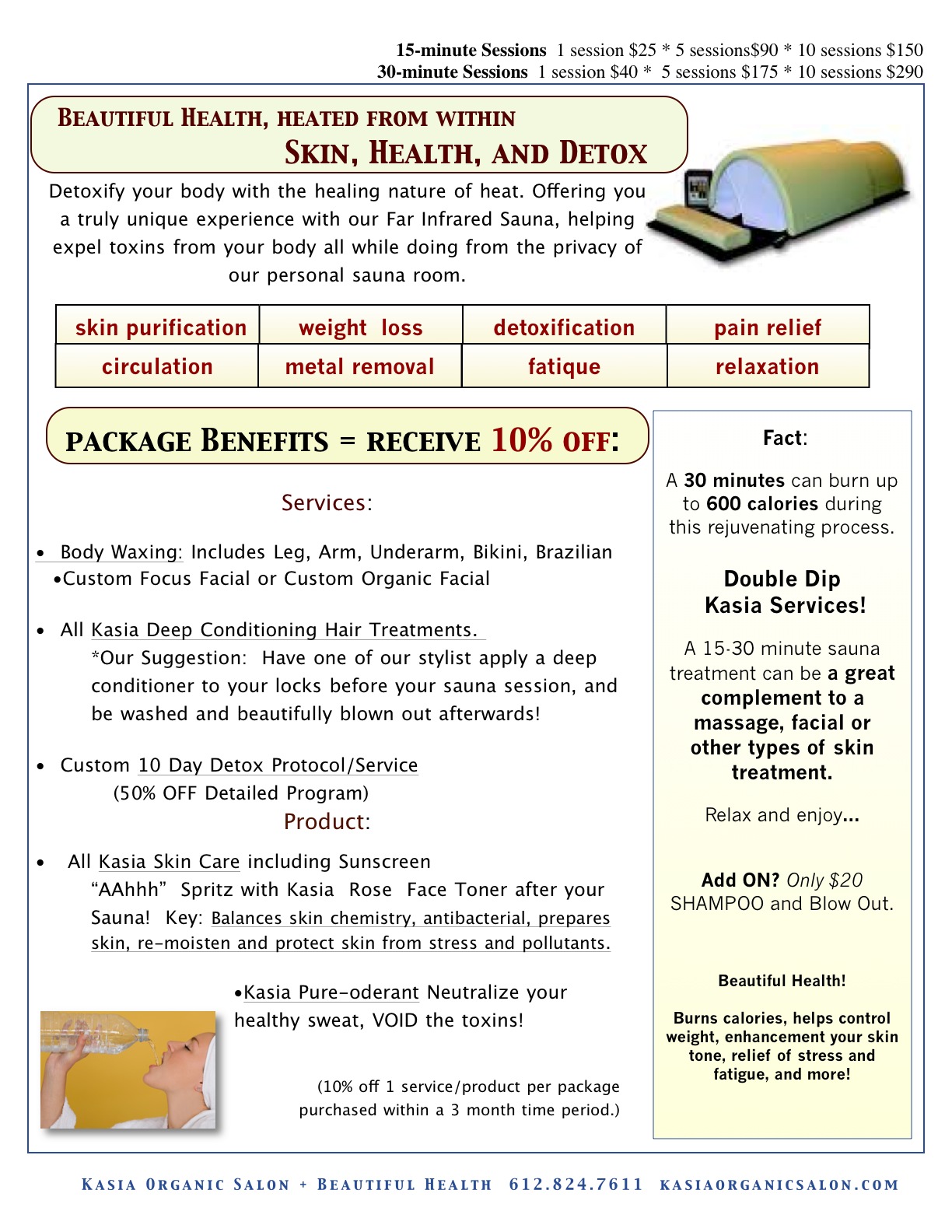
Infrared Sauna Medical Studies and Articles

The evidence is clear. Toxins are every where, in our water, air, food, soaps, shampoos, even in the clothes we wear. It has become commonplace to read about mercury in our fish, jet fuel in our lettuce, heavy metals in our air. Toxins have been directly linked with a host of diseases: cancer, lowered immune function, arthritis, autism, fibromyalgia, alzheimers, neurological and cardiovascular disorders, just to name a few. People living today carry within their bodies a chemical cocktail made up of industrial chemicals, pesticides, food additives, heavy metals, general anaesthetics, and the residues of therapeutic pharmaceuticals, as well as toxins from alcohol, tobacco, caffeine, and illegal drugs. It is a problem that is not going away, at least not in our lifetime. We need to detoxify!

Sherry Rogers MD in her groundbreaking book, Detox or Die, says toxicity is a one-way street leading to disease; the key to healing the impossible is to reverse the toxicity. But what is the best way to detoxify? There are several methods being used today: chelation, where enzyme preparations are injected into the bloodstream, binding toxins as they pass through and are excreted; fasting, with or without herbal and mineral preparations and/or colonics to help to remove toxins; and saunas, removing toxins through sweating.

Validity through Medical Studies and Articles

  • Kaiser Permenante Article On The Health Benefits Of Saunas
  • Detoxification Through the Skin by Mark Sircus Ac., OMD March 6th, 2005
  • Circulation Journal December 2004 study on infrared sauna use in patients with chronic heart failure.
  • Saunas Improve Results for Heart Patients by author Patricia Palmer
  • Repeated thermal therapy improves impaired vascular endothelial function in patients with coronary risk factors by Imamura M, Biro S, Kihara T, Yoshifuku S, Takasaki K, Otsuji Y, Minagoe S, Toyama Y, Tei C. October, 2001
  • Repeated sauna therapy reduces urinary 8-epi-prostaglandin F(2alpha) Masuda A, Miyata M, Kihara T, Minagoe S, Tei C. Department of Cardiology, Respiratory and Metabolic Medicine, Kagoshima University, Kagoshima, Japan March, 2004
  • Heat in the treatment of patients with anorexia nervosa by Gutierrez E, Vazquez R. March 2001 (opens in new window)
  • The Effects of Repeated Thermal Therapy for Patients with Chronic Pain by Akinori Masuda, Yasuyuki Koga, Masato Hattanmaru, Shinichi Minagoe, Chuwa Tei 2005 (opens in new window)
  • The effects of repeated thermal therapy for two patients with chronic fatigue syndrome. by Masuda A, Kihara T, Fukudome T, Shinsato T, Minagoe S, Tei C. April 2005
  • Thermal Therapy Benefits Depressed Patients 2005
  • Clinical Implications of Thermal Therapy in Lifestyle-Related Diseases by Sadatoshi Biro, Akinori Masuda, Takashi Kihara and Chuwa Tei 2003. Obesity And Diabetes: Pathophysiological Mechanisms And Therapeutic Approaches
  • Repeated Thermal Therapy Diminishes Appetite Loss and Subjective Complaints in Mildly Depressed Patients by Akinori Masuda, MD, PhD, Masamitsu Nakazato, MD, PhD, Takashi Kihara, MD, PhD, Shinichi Minagoe, MD, PhD and Chuwa Tei, MD, PhD 2005. From the Psychosomatic Medicine, Respiratory and Stress Care Center, Kagoshima University Hospital, Kagoshima, Japan (A.M.); the Department of Internal Medicine, Faculty of Medicine, Miyazaki University, Miyazaki, Japan (M.N.); and Cardiovascular, Respiratory and Metabolic Medicine, Kagoshima University, Kagoshima, Japan (T.K., S.M., C.T.).
  • Probiotics - Inner Health for Outer Beauty

    Probiotic literally means “for life”, and unlike the foreign bacteria which cause illness and infection, probiotics can play an important role in promoting intestinal health. Probiotics are similar to the good bacteria which occur naturally in the digestive tract and can be beneficial in treating a range of ailments, including skin conditions such as acne and eczema.

    Healthy intestinal flora is essential for the effective digestion of food. By promoting healthy bacteria, probiotics aid the proper absorption of nutrients and minerals, and help establish a barrier against a variety of harmful bacteria, allergens, free radicals and pollutants.

    Poor bacterial ecology can exacerbate hormonal, digestive and immune imbalances. These imbalances can in turn effect virtually all chronic skin diseases. Dandruff, candida, leaky gut syndrome and acne are just some of the skin conditions which may be associated with a lack of friendly bacteria in the digestive tract. Rosacea and eczema - skin ailments often related to stomach acid and nutrient deficiencies, food sensitivities, and faulty fatty acid metabolism - may also be exacerbated by low levels of healthy intestinal bacteria.

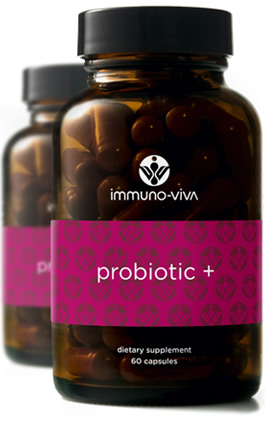
    Supplementing your diet with super strain probiotics will help cleanse the digestive tract and promote a clear complexion. Kassie of Kasia Organics Skin Care suggests introducing  Immuno Viva Probiotic + for healthy gut flora, along with a diet rich in living foods, fresh organic fruit and vegetables and plenty water.  These nutrients not only nourish and feed the skin, they also cleanse the intestinal tract, and as your gut becomes healthier, so too will your complexion. A foundation of Salon Kasia and Beautiful Health is directly related to your internal health.

    Part of this could be due to the fact that some of the incredible statistics about your intestine read like a "Ripley's Believe It or Not". Did you know that:

    • About 80% of your immune system lives in your gastrointestinal tract.

    • 500 different species of bacteria live inside you.

    • About one hundred trillion bacteria live inside you -- more than TEN TIMES the number of cells you have in your whole body.

    • The weight of these bacteria is about two to three pounds.

    • Some of these bacteria are referred to as "good", but others do not provide any benefit. The ideal balance between them is 85% good, 15% "other".

    Note: Choose your probiotics supplements carefully. Not all probiotic supplements will have the same qualities.

    At Kasia Salon, we have noticed many positive skin changes under the influence of an essential fatty acid and gastro-intestinal supplementation.

    **  KASIA INFORMED BEAUTIES LOVE.....

    Immuno Viva Probiotic Plus!

    Did you know?

    • Topical skincare products address about 20% of your skin’s needs.
    • The other 80% comes from proper nutrition.

    Immuno-Viva’s nutritional supplements help to heal and strengthen cellular membranes and protect cells’ internal structures. They work synergistically with Kasia Organic Skincare’s topical products to improve the health of skin, hair and nails.

    Good health begins with good digestion. Immuno-Viva® Probiotic+ delivers a robust blend of probiotics, or "good flora," to help promote healthy, regular digestion.*

    • Seven types of probiotics promote healthy digestion*
    • Cranberry seed extract promotes urinary tract health*
    • Antioxidants promote overall health*

    Probiotic+ uses patented Biotract technology which protects the probiotics from harmful effects of gastric acid, so they survive until they reach the GI tract. Our probiotic blend contains 10 billion CFU/serving at time of manufacture.

    Learn more about Probiotic Plus and Immuno Viva HERE.

    Kassie Kuehl/Kasia Organic Salon

    www.kasiaorganicsalon.com

    // User Icon Setting (may be set to BLACK, WHITE or NONE):