Get Past Your Cravings: What Your Body Really Needs

Inflammation and an unbalanced biochemistry are critical to treat In order to keep your skin clear and glowing.  Inside-out, this is first accomplished  through  maintaining a healthy diet. As a quick refresher, the top foods that you want to avoid for the sake of your skin are:

  1. SugarDepositphotos_3299617_xs
  2. Dairy
  3. White flour

While most of us know that it’s important to eat well, not just for the sake of our skin but for our general health, it becomes very difficult when cravings take over.   When we think we’re craving something bad, our body is really craving something else – typically nutrients that we are not getting from our diets.


The chart below is a helpful source in helping you to decode and get past your cravings.

For example:

DONT: When I am craving a cupcake

DO: Eat a  serving of fruit such as berries or grapes  and a hard boiled egg.

Suggestion :  print this table and keep it with you so that you have it nearby in times of need.


cravings

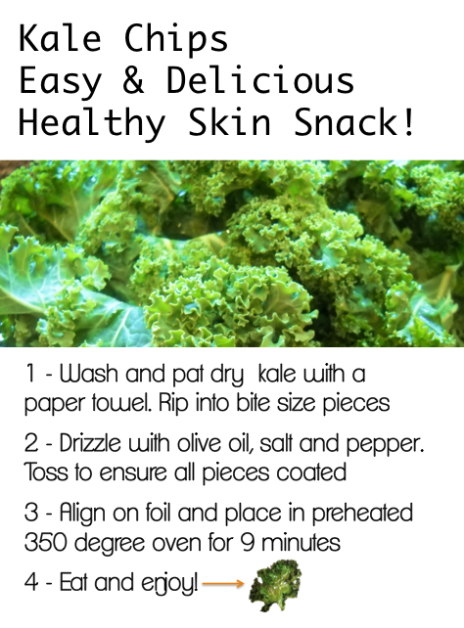
DIY Kale Chips: Easy and Delicious Healthy Skin Snack!

healthy-skin-snack.png

"Oooh ooh, I just have to share a recent favorite snack!"  Kale Chips!!!!!

They can be homemade or purchased at the store.  if you’ve never made these before, it's quite easy.   Yup, the entire process takes less than 15 minutes!   Affordable and quick!

Tip:  I like to add all sorts of seasonings and cold pressed oils to my kale chips. Experiment!

Kale is an excellent source of phytonutrients as well as Vitamins A, C, and K, and calcium, which represent some of the requisite nutrients for skin health. Kale is also one of the richest sources of lutein and contains beta- carotene, which improves skin elasticity and firmness.

kale

The 7 Most Common Symptoms of Low Thyroid Function

While a healthy thyroid helps support hair growth, thyroid imbalances can negatively impact it. It's estimated that as many as 59 million Americans have a thyroid problem, but the majority don't know it yet. The thyroid, a butterfly-shaped gland located in the neck, is the master gland of metabolism. When your thyroid doesn't function, it can affect every aspect of your health, and in particular, weight, depression and energy levels.

The thyroid does not affect the scalp itself, but it can interfere with the hair growth cycle. If you are experiencing scalp problems alongside a thyroid imbalance it is probably coincidental.

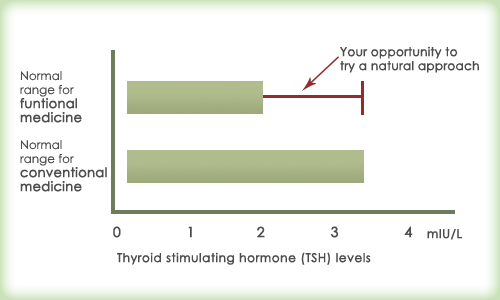
testsandwhattheymean

WHAT IS THE THYROID AND WHY DOES IT AFFECT HAIR GROWTH?

Your thyroid is a gland at the base of your neck that regulates your bodies’ metabolism via the production of ‘thyroid hormone’. It also controls the production of proteins and tissue utilisation of oxygen – which is why it affects hair follicles and hair growth.

Thyroid disorders occur when your thyroid gland produces too much or too little hormone. This is classed as either ‘hyper’ (high) or ‘hypo’ (low) thyroid, whereby your thyroid is either over or underactive. Either a hypo or hyperthyroid can cause hair loss – and in fact a hypothyroid is known to cause hair loss in up to 50% of people.

thyroid


7 most common symptoms of low thyroid function are:

1. Severe fatigue/loss of energy: If you suffer from a thyroid issue, you may feel highly fatigued and sleep more than average — but even after the extra sleep you don’t feel rested or have any energy.

2. Weight gain/difficulty losing weight: When your thyroid slows down — even a bit — so does your metabolism. That’s why unusual and unexplained weight gain and changes to body shape can be the first noticeable symptoms.

3. Dry skin, brittle nails: New wrinkles, dry or cracked patches, and itchy rashes are signs of imbalance in your thyroid hormones.

4. Brittle hair, itchy scalp, hair loss: Your thyroid plays a role in your hair’s growing and resting cycle. Without proper thyroid functioning, your hair follicles stay in the “resting” phase rather than growing actively. In addition to brittle hair or hair loss, thyroid issues can also cause premature graying of the hair.

5. More sensitivity to cold and lower body temperature. Always feeling cold is a telltale sign of a problem with your thyroid hormones, which greatly influence body temperature.

6. Diminished sex drive: Imbalances in your thyroid can affect your reproductive hormones, and lead to lower levels of desire.

7. Puffiness in face and extremities: Another telltale symptom of hypothyroidism is puffiness in the face, most often around the eyes.

As one of the centers of your endocrine system, your thyroid influences how your other hormones are used. That’s why an underactive thyroid can influence so many functions in your body — and lead to such a wide range of symptoms.

Thyroid disorders are easily diagnosed during a routine blood test.  Read more about Thyroid biomarkers, tests, and what they mean here. 


Reference:  Womentowomen.com

Kasia Memorial Day Weekend Must Haves!

MemDay2-580x4351.jpg

MemDay2It’s official: summer begins when the holiday weekend commences on Friday. Which means it’s time to stock up on sunscreen, get your tresses in order, and get serious about your summer look! To help organize your Memorial Day checklist, Kasia’s Valerie Engelman shares her summertime essentials for keeping hair and skin looking healthy and youthful:

Save Face:

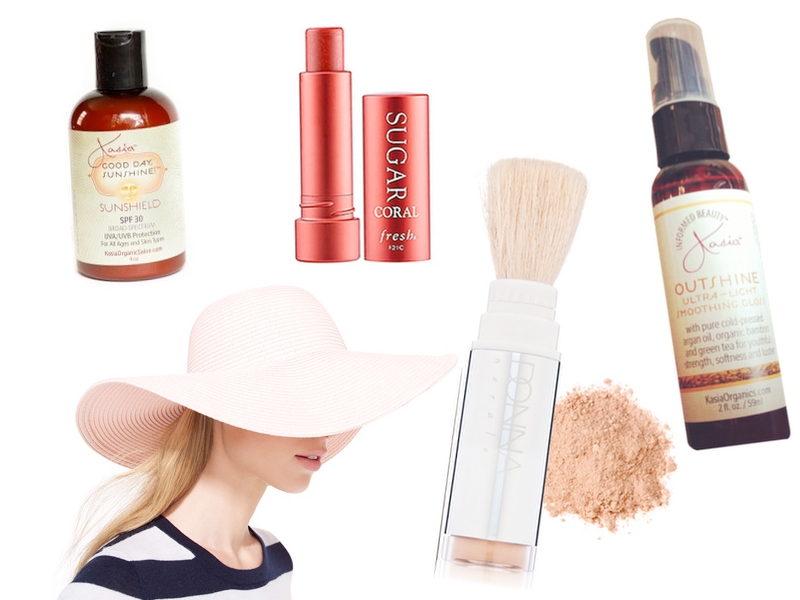
Whether you’re on vacation or just hanging in town, start everyday with La Bella Donna’s Loose Mineral Foundation. Offering lightweight, glowing coverage, it contains micronized titanium dioxide, a natural sun protection with SPF 20 that blocks harmful UVA/UVB rays. Plus, the On the Go version comes in a convenient case with the brush attached--simply remove the top and apply in a sweeping motion. It’s perfect for your beach bag or purse for those quick touch ups.

Lip Service:

Add an effortlessly chic pop of color to your look with a fun lippie! Want sheer color with a moisturizing kick? Snap up Fresh’s Sugar Lip Treatment SPF 15 in Coral. But if something a little more bold is on the agenda, go for Kat Von D’s Everlasting Love Liquid Lipstick in Outlaw. The formula goes on smooth and stains lips into a rich, matte finish that will last and last.

Keep it Covered:

Two items you should never be without are Kasia’s Good Day Sunshine Sunshield and a cute hat to keep you shaded in style. Our newly formulated Sunshield is so good you can eat it – really!! Packed with food-grade certified organic ingredients, you can rest assured it’s safe for the entire family. Plus, we’ve added anti-aging Vitamin D to stimulate collagen production and prevent wrinkles, while Organic Extra Virgin Olive Oil helps keep skin moisturized.

For those days when you are in a rush or simply can’t wait to get outside, it’s a no brainer to throw on a hat to protect your hair and your face from the sun. Wide brimmed hats are making a huge comeback (J.Crew has the perfect option!), or try a cute baseball cap, maybe a trendy floral option, for a Happy Hour on the patio with the gals.

Haute Hair:

Outshine the rest and avoid damaging your locks by applying Kasia’s new Outshine Ultra Light Smoothing Gloss. Not does it add gorgeous shine, it helps protect and repair! Using 100% pure Argan Oil to retain moisture, bamboo and rhodiola to strengthen locks, Green Tea for UV protection, and Silk Amino Acids to help repair damage, this product is the perfect one-stop-shop for achieving beautiful, healthy looking hair! And, our Argan Oil is hand-harvested and sustainably produced by a women’s co-op in the Southwest Moroccan Argan Forest. It’s a win-win-win!

Whatever your plans are for this long weekend, enjoy and keep your skin and hair looking youthful and healthy!

Kasia Memorial Day Special

Purchase our *NEW* Organic Good Day Sunshine Sunshield  & Receive 15% OFF our 1oz Anti-Aging Tinted SPF Moisturizer.


Yours Truly - Val (Kasia Hairstylist)

Kasia Organic Salon   612.824.7611    Kassie@KasiaOrganicSalon.com

The Toxic Truth About Gluten-Free Food

51754ea4c1723.jpg

Enjoy this is a guest post from Jordan Reasoner and SCDLifestyle. 


Today, even the smallest grocery stores across America are beginning to carry gluten-free foods in a “healthy living” section, right next to the green tea.

Gluten-Free foods are becoming ubiquitous and synonymous with living a healthy lifestyle… even for people without Celiac Disease.

But is gluten-free really healthy? Will it make Celiac Disease a distant memory?

I’m here to tell you no… and there’s a lot to talk about.

The gluten-free diet is the wrong prescription for Celiac Disease


Evidence is piling up that high inflammation, poor vitamin status, and leaky gut persist on a gluten-free diet, which leads to one thing: untreated Celiac Disease…

But what could possibly be wrong with a gluten-free diet?  Doesn’t gluten cause Celiac Disease?

Yes, gluten causes Celiac Disease and it must be eliminated to treat Celiac Disease… in fact, research suggests that even an acute gluten exposure triggers a 70% increase in intestinal permeability (leaky gut) and a spikes inflammation for as much as 6-months[1].

But there’s a laundry list of other foods that drive inflammation and keep the gut leaky.  Don’t get me wrong, gluten is the worst offender.  But a Celiac’s gut is severely damaged and highly susceptible to poor food choices.  If you don’t remove the “other dietary triggers” contributing to the disease, you’re going to end up sick and pissed off like I was.  Going gluten-free isn’t enough… and here’s why.

Eating gluten-free is usually toxic

Mainstream literature on Celiac Disease tells us that eating gluten-free is a healthy lifestyle choice and Doctor’s regularly explain it as the only way to treat newly diagnosed Celiac Disease patients.  But the treatment plan is dripping in the same conventional wisdom that created the current Standard American Diet (SAD).

That’s the rub: the average gluten-free diet is built on the same foundation as the SAD… both are low-fat, highly processed diets made up of toxic foods.

The biggest problem with the Gluten-free diet is the reliance on processed foods that are low in nutrients and high on toxins.

The standard gluten-free diet typically contains 4 specific food toxins that contribute to leaky gut, inflammation, and poor vitamin status:

  • Cereal grains (like corn, rice, and oats)
  • Soy (soy milk, soy protein, soy flour, etc.)
  • Industrial seed oils (Canola oil, grapeseed oil, safflower oil, and sunflower oil)
  • Sugar (especially high-fructose corn syrup and table sugar)

Even though the worst offending food toxin, gluten, is removed – the gluten-free diet relies heavily on the other four agents of modern disease to create a diet that “looks” very similar to the Standard American Diet.  In fact, many types of gluten-free pasta and other packaged foods are loaded with higher concentrations of these 4 food toxins than their original counterparts.

Gluten-free cereal grains are waging war on your gut

In “How Gluten Causes Celiac Disease” I explained that the main reason we don’t eat wheat and other gluten-containing grains is that they contain a protein called gliadin, which is a prolamine that increases zonulin production, causing leaky gut and inflammation.

And remember when I said that plants carry weapons of mass destruction?

It’s no joke… plants are concerned about their survival just like we are.  They don’t want to die, which is why they have defense mechanisms to protect them, like toxic antinutrients and proteins that should deter any living being from eating them.

Most cereal grains contain a toxic protein called “prolamines,” which are knurly, tough proteins that humans can’t digest.  The research is very clear: we aren’t equipped to “digest” or break down prolamines small enough to absorb any nutrients[2]

Toxic prolamines give the plant a protection mechanism for their survival (since they can’t get up and run away).  These proteins irritate the gut lining and sneak their way past the intestinal wall in humans and animals that eat them.

Gliadin is the prolamine in wheat, but other cereal grains common on the gluten-free diet have similar proteins that also cause problems:

  • Zein, the prolamine in corn, has been shown to be problematic for Celiacs[3]
  • Avenin, the prolamine in oats, triggers a powerful inflammatory response in Celiacs[4]
  • Orzenin, the prolamine in brown rice, can cause inflammation in the gut of children[5]

Prolamines are the big guns defending the plant from being eaten alive… but that’s not the only part of these cereal grains that cause problems.  They contain another secret weapon just as powerful…

Plant lectins in gluten-free cereal grains are toxic too

If prolamines are weapons of mass destruction, then plant lectins are the plants special forces executing individual suicide missions against your gut lining.  These toxic sugar-binding proteins don’t get digested either, and they bind to the cells on the gut wall (enterocytes) and prevent them from completing their normal healing processes (causing them to die). Not only that, but research shows they weasel their way past the intestinal wall and cause leaky gut… and trigger our old friend inflammation[6].

These so-called “healthy, gluten-free grains” are waging war inside your gut because they don’t want you to eat them either… just like gluten.  And so far we’ve talked about how these cereal grains promote leaky gut and inflammation…

But remember earlier when I made the point that a gluten-free diet leaves many Celiacs with inflammation, leaky gut, andnutrient deficiencies?

Phytates steal vitamins and minerals right under your nose

Phytates are not for plant defense – they’re for self-fertilization of the plant.  They’re specially designed to keep the plant supplied with the necessary vitamins and minerals it needs to stay alive

When we eat them, they bind to metal ions inside us, so they can impair the bioavailability of critical minerals like calcium, magnesium, iron, and zinc[7].  Not only that, but they inhibit the enzymes we need to properly digest foods and extract nutrients from them.


These toxic assaults all add up… and they begin to paint the picture that the gluten-free diet doesn’t work. Even Quinoa, a frequent staple of the “healthy” gluten-free diet, contains large quantities of Saponins.  Saponins are another plant defense chemical that severely damages the gut wall and causes leaky gut[10].

Soy disrupts your hormones and your thyroid

Soy is another food that gets coined as “healthy” in mainstream media.  It’s found in many gluten-free foods and is even touted as an alternative to eating animals.   The Soy industry has spent a TON of time and money trying to convince us soy is healthy.  The reality is: Soy’s filled with toxins.  Here are the 4 main problems with soy in regards to Celiac Disease:

  1. Soy screws up your hormones because of the presence of phytoestrogens.  This is important because these phytoestrogens are linked to cancer growth and infertility problems.  Your hormones need to be working correctly to recover from illness.
  2. Soy messes up your thyroid.  We already covered that if you have Celiac Disease you’re chances are extremely high of getting other autoimmune conditions of the thyroid (like Graves Disease).  The same phytoestrogens messing with your hormones are also implicated in hypothyroidism and potentially thyroid cancer[11].
  3. Soy is high in phyates, which means it robs you of valuable minerals like calcium, magnesium, zinc, and iron.[12]
  4. Soy increases the need for more vitamin D, which we already know contributes to leaky gut.

For a complete listing of the toxic effects of Soy, check out this PDF from the Weston A. Price Foundation.  Just like grains, soy contains toxic chemicals that don’t support recovering from Celiac Disease.  Simply put: there’s much better quality food to put in your mouth.

Industrial seed oils inflame your body

Consumption of industrial seed oils (corn, cottonseed, soybean, safflower, sunflower, etc.) has dramatically increased in the last century and the gluten-free diet is no exception.   Many processed food off the shelf contain these seed oils that are high in omega-6 fatty acids.  In fact, you might even think that some of these oils are “healthy”.

Here’s the thing: when Omega-6 and Omega-3 fatty acids are in a balanced ratio, they don’t promote inflammation.  But when Omega-6 fatty acid consumption increases without a corresponding increase in Omega-3 fatty acids, the ratio is out of balance and inflammation occurs.  It’s common for a gluten-free diet to be high in omega-6 fatty acids from industrial seed oils and low in omega-3 fatty acids.  That’s a recipe for an inflammatory cascade…

Sugar fuels the fire roaring in your body


Carbohydrates and Sugars are the primary food for the bacteria in our gut. Bacteria live on sugar, that’s normal.  What isn’t normal is the type of bacteria found overgrowing in the gut of a Celiac patient.  Normally there’s a balance between good and bad bacteria.

When the delicate gut flora balance gets upset, opportunistic or pathogenic bacteria can quickly take over and cause ”Gut Dysbiosis” or small intestinal bacterial overgrowth (SIBO).  One reason Celiacs frequently have gut dysbiosis is a result of thedamage to the villi of the small intestine.  During the active stages of Celiac Disease, the villi aren’t working properly and carbohydrate malabsportion can occur (meaning there’s suddenly a ton of extra food for the bacteria to feast on).

Here’s where the gluten-free diet fits into all this…

The most common sugar consumed in the standard gluten-free diet is sucrose (or table sugar).  Sucrose is made-up of one glucose molecule and one fructose molecule bonded together to create a disaccharide (2 sugar molecules).  Sucrose gets broken down by the digestive process into mono-saccharide molecules to be absorbed by the gut.

Here’s the catch: the main “splitter” for these chemical bonds is the micro-villi, which we just discussed are damaged and not able to do their job.  This leaves us with a surplus of sugar molecules hanging around in the intestine feeding bad bacteria (Read this article for in-depth info on the different kinds of sugar).

In general, the standard gluten-free diet is primarily made-up of processed carbohydrates and processed sugars, which are mostly di- and polysaccharides that need to be “split” in the gut before  they can be absorbed.  Having a ton of undigested carbs and sugars hanging out in your gut creates the perfect recipe for digestive problems and SIBO…

SIBO makes your gut leak


Researchers have identified small intestinal bacterial overgrowth (SIBO) as the only other stimulus powerful enough to trigger zonulin release and create leaky gut the same way gluten does[14].  In fact, they theorize that the body responds to SIBO by opening up the tight junctions as a defensive immune response intended to flush the bad bacteria from the body[15].

SIBO is overgrowth condition that drives leaky gut syndrome and the gluten-free diet is the fuel to feed the overgrowth.  In one study, researchers took small intestinal biopsies from children with Celiac Disease to understand the role bacteria played in the disease.  Their results were frightening: they not only found SIBO, but they discovered these children had 42 different rod-shaped bacteria, 30 of which had never been found in the human small intestine before… 18 of which were completely unknown[16]!

Another study looked at adult Celiac patients that weren’t getting better on a gluten-free diet and found that, “SIBO affects most Celiacs with persistence of GI symptoms after gluten withdrawal.[17]

How can SIBO cause so much trouble? 

Pathogenic bacteria produce toxic byproducts that get released in the gut and the bloodstream, (like lipopolysaccharides – LPS).  These toxins can severely damage the intestinal cell surface, triggering an inflammatory response as the body attempts to fight off the perceived bacterial threat and cause difficulty digesting and absorbing certain carbohydrates.  They can also find their way into the bloodstream and wreak havoc on the liver[18].

Not only that, but while they happily feed on undigested sugars and other carbohydrates that are supposed to feed you, they release gases like hydrogen and methane.  The end result is gas, bloating, and diarrhea or constipation… and perpetually untreated Celiac Disease.

The inflammation-leaky gut cycle

The bottom line is: If you have Celiac Disease, you have leaky gut and bad gut flora.

We’ve talked about how prolamines and lectins cause inflammation and leaky gut.  We’ve talked about how SIBO causes inflammation and leaky gut… and all within the confines of a gluten-free diet.

When your gut flora is out of balance and your gut barrier is damaged, your gut is going to be inflamed.  Inflammation triggers leaky gut and leaky gut triggers inflammation[19].  They all feed on each other in a vicious cycle that looks like this:

leaky-gut-inflammation-cycle

The only way to begin treating Celiac Disease is to break this inflammation-leaky gut cycle… and the first step is to recognize that gluten-free isn’t enough.  There’s a better way to eat that can begin to halt this process.

So what can a Celiac eat to feel better?

The answer is: eat easy-to-digest, low-toxin, real foods.  Foods that don’’t feed bad bacteria or promote inflammation… but at the same time provide adequate nutrition and improve intestinal permeability.

In other words the ideal Celiac Disease diet:

  • Doesn’t contain processed foods filled with added sugars, vegetable oils, additives, or dyes that damage health
  • Eliminates disaccharides and polysaccharides to starve out overgrown bad bacteria (SIBO)
  • Eliminates the most toxic food groups: cereal grains and soy
  • Encourages consumption of low-toxin whole foods in their natural state
  • Encourages plenty of nutrient dense animal products filled with protein and healthy fats
  • Encourages plenty of good bugs (probiotics) through fermented foods or supplements

The gluten-free diet doesn’t fit the bill…

Simply eliminating cereal grains that promote inflammation and leaky gut is a step in the right direction.  But if you remove the other 3 toxic foods I mentioned above (soy, industrial seed oils, and sugar) you’ll be one step closer to recovery.  At that point, you’ll be eating a whole food, non-processed diet – which is ideal for optimal health based on what we know.

Is that the same thing as a Paleo or Primal diet?

The SCD diet is a form of low-carb paleo/primal that removes common irritants that are problematic in the gluten-free diet, but it also limits the availability of carbohydrates as a food source for bad bacteria and starves them out over time.  As the small intestine improves, Celiacs can begin to properly absorb nutrients again.  The volume of sugars that are allowed to ferment in the digestive tract becomes less and the symptoms of bloating, gas, and diarrhea start to go away.

About the author

Jordan Reasoner is a health engineer and author. He was diagnosed with celiac disease in 2007 and almost gave up hope when a gluten-free diet didn’t work. Since then, he transformed his health using the SCD Diet and started SCDLifestyle.com to help others naturally heal stomach problems.

Kasia Medi-Facial for Anti-Aging Skin: The Types of Chemical Peels

The  Kasia Skindeep Organic Medi-Peel and/or Facial have a 2.0% Retinaldehyde, making it the only non-acid peel that will infuse the dermis with fibroblast stimulators, immune boosters, antioxidants, pigment lighteners, and calming anti-inflammatory and anti-bacterial ingredients. 

medi-facial

Kasia Professional Medi-Facial 

We believe this is the most effective peel and/or procedure on the market.

Instead of wounding the skin, Kasia's Skin Specialists work with a med-peel that is potent in liposomal delivery.  It delivers by activating calming, antibacterial, lightening and (8) dermal remodeling ingredients, which are great for every skin condition. It is extremely safe because it is free of any alpha/beta hydroxy acids and it is therefore tolerated by all skin types.

What to expect:  You will see mild to moderate exfoliation 2-3 days after the peel which lasts for another 2-3 days usually. The peel is gentle but the results are significant!

 Learn more about our facial series and services HERE.

Types of chemical peels

There are several different types of chemical peels.  Chemical peels remove dead skin cells in order to allow newer skin to regenerate itself. Essentially, it is a form of exfoliation.

Alpha hydroxy acids (AHAs). AHAs are a group of mild organic acids most often derived from fruit, sugar cane and milk. AHA peels promote increased epidermal sloughing and are best for clients who want to improve skin tone and reduce the appearance of fine lines, acne scars and other dark marks. The most common AHAs are glycolic, lactic, tartaric and malic acids.

Beta hydroxy acid (BHA). BHA (also known as salicylic acid) treats the same skin conditions as AHAs; however, it penetrates the epidermis more deeply than AHA peels. Salicylic acid is found in wintergreen leaves and birch bark, and it has been used for decades to treat conditions, such as acne, warts and psoriasis. BHA peels are considered anti-inflammatory and antimicrobial. These peels work well with sensitive, oily and acne-prone skin. It is important to note that because salicylic acid has properties similar to aspirin, it should not be used on clients with aspirin allergies.

Jessner’s. Stronger than BHAs, the Jessner’s peel is also good for treating oily skin, acne and fine lines. Still considered a light peel (unless multiple coats are applied, in which case it is a deep peel), Jessner’s often combines salicylic acid, resorcinol and lactic acid in an ethanol solution--depending on the manufacturer. This peel removes dead skin throughout a period of six to 10 days. This treatment works especially well for clients with pigment irregularities, including melasma.

Trichloroacetic acid.TCA is a standard agent in medium-level chemicals peels. As TCA is a deeper peel than Jessner’s, it must be performed under a physician’s supervision unless the peel is less than 10% TCA. This peel works to coagulate skin protein in order to treat skin imperfections, discoloration, fine lines and wrinkles. This peel needs to be used with caution when treating darker skin tones, because there is a risk of the peel causing hyperpigmentation.skin

It is our goal at Kasia to give you  the best results possible by providing detailed pre- and post-care instructions to reduce the chances of irritation.  Our Professional Med-Peel series is great for all skin types and requires no "down time."  The other peels recommended in this article can be beneficial, but the key piece to remember is that as the skin get's older, it grows more sensitive, produces less collagen for repair, and becomes thinner.

Our Med-Peel is one of the newest peels on the market, and is a key asset to "YOUTH-i-FYING" one's skin.

Contact our skin care specialist today at 612.824.7611


Beautiful Health with Summer Alkaline Foods


Enjoy Alkaline Foods and Increase your Beautiful Health this summer.  

  Less inflammation in the body creates a better environment for healthier hair and skin.  

images-4

The body is always striving for health, continuously cleansing itself of waste material. It’s a self-cleaning, self-healing, self-maintaining, and infinitely forgiving wondrous creation. It will always regenerate itself if given the proper natural material.

There is a difference in surviving and thriving. Our brains, body, and soul can flourish with the proper fuel!

To maintain beautiful health, an alkaline diet should consist of 60% alkaline forming foods and 40% acid forming foods. To restore your health, your alkaline diet should consist of 80% alkaline forming foods and 20% acid forming foods.

Healthy, Alkaline-Forming Fruits & Vegetables

Some fruits are highly alkaline foods…

Including apples, apricot, avocado, bananas (high glycemic), blackberries, cantaloupe, fresh coconut, real cherries, dates and figs, pears, oranges, pineapple, peaches, raisins, grapes, grapefruit, honeydew melon, lemons and limes (citric acid? more on this shortly), nectarines, raspberries, tomato, tangerine, most tropical fruits, watermelon and strawberries.

Vegetables Foods with High Alkalinity

Including most green vegetables, such as asparagus, dandelions, wheat grass, alfalfa sprouts, seaweed, sea vegetables and salt, watercress, broccoli, spinach, celery, fresh green beans, sweet potato, pumpkin, peas, peppers, onion, lettuce, mushrooms, Brussels sprouts, green beans, eggplant, garlic, escarole, cucumber, cabbage, carrot, fennel, beets, chestnuts, almonds, chili pepper, tamari, ginger and cinnamon.

Additional high alkaline-forming foods


Other food products are alkalizing or become alkaline once they are eaten.  Alkalizing sweeteners include rice syrup, unprocessed maple syrup and stevia.  Millet, whey protein powder, almonds, chestnuts and fermented tofu are alkalizing proteins.  Alkalizing beverages include pure or mineral water, almond milk, vegetable broth, non-sweetened soy milk, fresh vegetable juice, lemon water and herbal tea.  Lemons are naturally acidic, but they become alkaline after digestion.

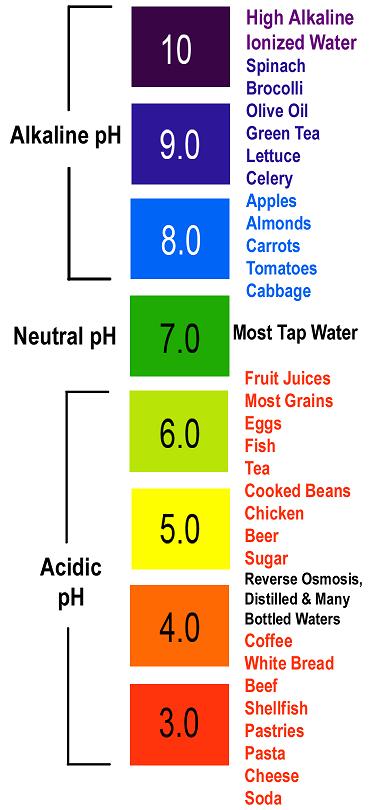
food_ph_scale


Summer Hydrating Acid/Alkaline Food List


Hydration is so important because every organ in our bodies relies on water to function properly. Drinking water is good, drinking alkaline, ionized water is vital to keep yourself hydrated. However, food also provides hydration, in fact about 20 percent of your daily fluid needs. Some foods are better sources of hydration than others.

Watermelon

Watermelon is one of the most hydrating foods out there. It’s made up of mostly water, but it also has essential hydrating salts, calcium, magnesium, potassium and sodium. It’s perfect for those hot summer days when you need to replenish your body.

Cucumber

Composed of 95 percent water, the cucumber is a good hydrating food choice. A 4-oz. serving of cucumber contains just 7 calories and 50 ml, or 2 oz., of water. Not only is the cucumber a good source of fluids, but it is also a good source of fiber and vitamin C.

Oranges

Like cucumbers, oranges also have a high water content, consisting of 87 percent water. A 4-oz. portion of mandarin oranges provides 110 ml, almost 4 oz., of fluid. Oranges are higher in calories than cucumbers, with about 40 calories in a 1/2-cup portion, but are also a good source of fiber and vitamin C.

Green Beans

Green beans also make a low-calorie hydrating food. A 1/2 cup serving of cooked green beans contains 20 calories and 115 ml of fluid.

Apples

Apples are also a good hydrating food. One medium apple contains 110 ml of fluid. Applesauce can also help you meet your daily fluid needs, with 110 ml per 4-oz. serving. Choose the unsweetened applesauce to limit calorie intake.

Berries

Also packed with water, berries contain high levels of antioxidants, which can help the body naturally detoxify itself. Berries also deliver tons of fiber, which can help you stay satisfied in between meals.

Red Bell Peppers

All bell peppers are hydrating sources of some of the best nutrients for the body. They contain vitamin C, thiamine, vitamin B6, beta-carotene and folic acid. Red bell peppers are even better because they contain lycopene.images-2

Pineapples

Pineapples are a delicious summer fruit. On top of the hydrating elements of pineapple, it is packed with bromelain. Bromelain has many health benefits, mainly helping with digestion. Pineapple is a great fruit to eat to help the body naturally detoxify itself and lose weight.

Organic Celery

Celery gets a reputation for being “negative calories.” That’s because it’s almost all water, and it takes a lot of energy to crunch and swallow! But the refreshing veggie also provides lots of mineral salts, vitamins and amino acids. Celery is a great snack to rehydrate and rejuvenate the body and the skin.

Green Salad

Most lettuce contains more than 90% water. So not only do green salads make for a delicious appetizer, snack, or lunch, but they also keep you hydrated in the summer weather.

Cabbage

Cabbage is an amazing vegetable to eat anytime. It’s known to lower cholesterol, and its packed with tons of vitamin C, making it an amazing beauty food. It also helps repair the body from the inside out. Incorporating cabbage into your diet can help you lose weight because its packed with fiber and natural probiotics

Carrots

Carrots may seem like a dense vegetable, but they are actually very hydrating. They are almost 90 percent water. And they have tons of beta-carotene, more than any other vegetable. Beta-carotene helps the eye sight, along with helping to protect against cancer.

Enjoy!


  Reference: http://www.healthalkaline.com


// User Icon Setting (may be set to BLACK, WHITE or NONE):