Informed Beauty

The Cocktail of a Chemical: Informed Beauty Guide.

We tend to forget that the skin is the largest organ of the body,and every day we apply a chemical cocktail of substances in ignorant bliss, there is continual studies suggesting that up to 60% of anything applied topically can be absorbed into our bodies. As the average woman uses up to 10-14 different skincare and cosmetic products each day, this calculates a high level of different chemicals each year seeping into our systems.

So why does this matter?

With many of the synthetic ingredients used in everyday skin care being potentially toxic to humans, you may like to reconsider some of the following:

Petrochemical derived ingredients (such as mineral oil) are extensively used in skin care as they help prevent water loss. While this may seem beneficial, they actually prevent the skin from breathing by forming an occlusive barrier, disrupting the skins normal functioning.

Parabens (a common preservative) have demonstrated oestrogen mimicking activity which disrupts the body's normal hormonal balance. In addition, parabens have also been shown to cause abnormalities in cell reproduction, an issue also associated with cancerous cells.

Sodium Laurel Sulphate (SLS) (a foaming agent) used in toothpaste, shampoo and foaming cleansers. Numerous trials showed that SLS can increase transdermal water loss causing the skin to become dehydrated and cause skin irritation.

Phthalates are a group of synthetic chemicals that are used in the production of various substances such as plastics, beauty products and artificial fragrances. Phthalates can interfere with reproductive tissues in both men and women leading to issues such as infertility and birth defects. Specifically it targets the testes in men and breast tissue in women.

Parfum and synthetic fragrances are the most common cause of adverse skin reactions. Propylene glycol is implicated in contact dermatitis, kidney damage and liver abnormalities. It also damages cell membranes causing rashes, dry skin and surface damage.

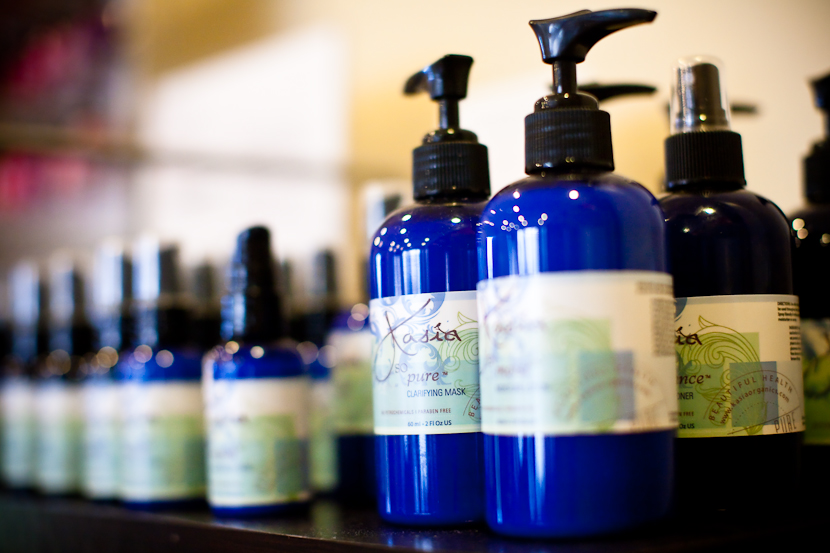
Finding safe and natural products can often be confusing - at Kasia Organic Salon, we have removed any guessing game from your "Beautiful Health" hair, skin, and service needs.

Ultimately, what you use on your hair or skin is an individual choice, and issues such as skincare goals, sensitivities or allergies, and personal values need to be taken into consideration. If you do choose to avoid ingredients such as those above the best way to do so is by reading product labels and making an informed decision. But if reading packages is not your style, it's usually safe to say that organic ingredients are best.

Kasia Organic Salon continues to launch options that are safe for you and your family.  Drop us a line or stop in for a consultation and learn more about our Ammonia Free Hair Color, Smoothing treatments, Medical Grade Facials, and more! 

What is Lifestyle Ageing?

  Wrinkles can be caused in a number of different ways. Twin studies verify that lifestyle choices can cause a significant difference in the appearance and wrinkling of the skin. In fact the argument can be made that while we cannot control our chronological age – we can control lifestyle aging to a significant degree. In other words LIFESTYLE AGING is the area in which we can make most impact in regard to our skin's appearance, particularly when it comes to premature aging.

How does aging effect your skin?  There are two basic types of skin aging.

Intrinsic and extrinsic, or in simpler language .....  chronological and lifestyle/environmental. 

Intrinsic aging  is how the skin ages chronologically or biologically in relation to age. Biological aging includes processes like, the slowing of collagen production, enzymes which attack collagen and elastin and the loosening over time of the dermal/epidermal junction. Most creams target this type of aging, largely ignoring extrinsic aging factors.

Extrinsic aging  is caused by environmental and lifestyle factors – and exactly what Kasia Organics Skin Care addresses. Lifestyle Aging can happen as a result of stress, diet, excess sugar, UV damage, smoking, pollution and so on. It is important to be aware and devoted to lifestyle aging and the environmental factors which cause us to age, targeting the cause as well as the symptom.

With a holistic approach to anti-aging at Kasia, we focus on each person and the significance of everyone ages differently for different reasons.


Learn more about our Kasia Beautiful Health Skin Care and Medical Facial Program!


Get NO STRESS Facial approach with Doctor Office Results!


             Kasia Beautiful Health Skin Care Void of Parabens, Synthetics....


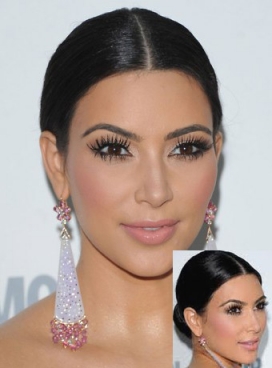
Full and Center Trend in Kim Kardashian's Bun!

  Minnesota's native Kris Humphries new love, Kim Kardashian has been highly noticed around the Eden Prairie Costco and Twin Games as she warms up to her soon to be hubby's stomping ground.  She is definitely known for her thick and rich hair, and if you notice she usually wears down with a center part.  Looking forward to her wedding "doo" - do you think it will be up or down, center part or side?

"Ok, this blog is far from idolizing Kim, but it is to pull  the current trend in hair right now.  Did you catch it? 

Center Parts and Buns!    Use these tips:

  • Prep your towel dried hair prior to washing and conditioning with Hamadi Shea Leave in Cream or Kasia Restore Oil.
  • Using a larger bristle round brush, blow dry the hair making sure to elevate the sections above the part for root volume.   Use  Onesta's  Volumizing Mousse on the roots if your is extra thick or dense.
  • Using a larger barrel curling iron, take larger vertical sections and slightly twist them. Start the curl near the root for lift and then roll the section horizontally making sure the ends are wrapped all the way into the curling iron.
  • Allow the curls to cool and separate lightly  with a  comb.
  • Spray with Simply Organic Hair Spray for a finish

Buns are quick and easy as it only takes a hairband and a few bobby or hairpins to secure. This type of style is fabulous for summer wedding hair or a simply solution to a casual maxi dress: bonus: it accentuates the bare neck, decollete and shoulders. Center parts are great because its a fast fix to elongate the face shape and in some cases it can visually accentuate hair length as well.


Photo Credit: Emerson Salon

Stop the Split End Manifesto!

  Whether you are growing your locks out or maintaining your recent professional cut from Kasia, there's no hair enemy as fierce as the dreaded split end!


The Kasia Hair Team can agree that the number one complaint of clients when coming in for a cut are their frazzled ends.  Old or young, chemically treated strands or your savaged natural hue, you stand at risk of experiencing this science.


"Split ends occur when the outer protective layer of the hair cuticle wears away because of external stressors such as heat styling, excessive pony tails, environmental stressors and chemically derived products that break the hair down over time,” explains Kassie, owner and stylist at Kasia Organic Salon.


There is no return back once the internal structure of the hair is exposed, it becomes weak, thirsty and damaged, resulting in split ends,” says Kassie.


The Way

While there is one road to ridding your luscious locks beaten up ends in having them snipped off, there are several ways to nurture your noggin’  between salon appointments to improve the look of damage and prevent more splits from occurring.


Condition and spread: Apply Kasia Weighless Conditioner or Restore Hair Oil Treatment in the shower, slowly run a wide-tooth comb through hair until all the tangles are out. This prevents the harsh pressure and breakage that results from trying to brush out hair that is roughed up from a towel-dry.


Mind your heat tools: The cheap blow-dryer or half off flat iron that barely heats up may be a tempting snatch, but inexpensive tools tend to dangerously overheat over time and burn ends into splits.  Do your homework and  use a brand recommended by a pro.


Be gentle: Treat your hair as a well-worth asset!  Just like the new suite you purchased, it will last longer and look better as you present yourself to the world

Use as natural and non-chemcially derived products as possible to achieve a long term health and shine to your locks.


Get your Omega’s, Protein, folic acid and biotin:  Nutrients literally build the proteins that make up your hair strands. B vitamins folic acid and biotin of  in particular,  have been shown to supplement hair health, length and thickness.


Folic acid helps the production of red blood cells, which powers the growth of hair. Foods rich in folic acid include green leafy veggies, oranges, soybeans and wheat. Biotin strengthens both hair and nails through its metabolism of fats, carbs and proteins. Brown rice, lentils, peas, sunflower seeds, walnuts and soybeans are all rich in biotin.


Antioxidants give you the anti aging protection against the diseases and help slow down the aging process of your skin, cells, tissues and organs. The main antioxidants found in food include vitamins A, C and E, the minerals selenium and zinc and all of the phytonutrient carotenoids.  Antioxidants keep free radicals from ravaging your body and stealing the life from your cells.


Critics used to claim there was no evidence that topically based products affected skin aging. Over the years, a remarkable number of published studies have proven these skeptics wrong! Science clearly substantiates the role that free radicals play in causing skin aging and the fact that topically applied antioxidants confer significant protection and can even partially reverse some aspects of skin aging. Indeed, various animal and human studies have proven that low molecular weight antioxidants, especially vitamins C and E, as well as alpha-lipoic acid exert protective effects against free radical damage (oxidative stress) (Podda et al. 2001).


Essential Fatty Acids offer anti aging benefits to dry skin, hair, and nails.   EFA’s will give your body the nutrients it needs for smooth, glowing skin and healthy hair and is even known to help balance hormones.


Fatty Acid (Omega 3) anti-aging benefits and reduction may be directly linked to cell inflammation. They help to keep the cells healthy and reduce the inflammation that may occur in the cell when omega 6 levels are too high.


Use leave-in conditioner or treatment oil: A leave-in conditioner will add extra protection that stays on strands as you heat and style your hair. Consider Kasia Restore Hair Oil Treatment, which you apply after every wash on towel-dried hair for best results.

Sunflower oil (comprised in Kasia Restore Hair Oil) contains fatty acids and are essential to hair health and effective in preventing hair loss from male and female pattern baldness and alopecia areata.


Lastly, get regular cuts: As stated, a good cut is the only way to fully get rid of split ends, regular trims provides the best protection against them. The longer you wait, the greater your split ends will make way up the shaft. It might sound oxy-moronic, but hair that remains the healthiest are those that receive frequent trims.  Especially if you're trying to grow longer, healthier hair.  The Kasia Organic Salon Hair Team suggests  getting a cut or trim at least every six to eight weeks.

Essential Nutrients for your hair and skin with antioxidants, cold pressed oils and fatty acids 


Kasia Organic Salon provides beautifying services with a side of environmental awareness. Put your eco-conscience and its cranial encasement at ease during your services at Kasia.


The former nurtures noggins with customized blends of essential oils, repairing damaged follicles while helping to prevent dandruff, some hair loss, and scalp irritation.


With the health of your head restored, a skilled scissor shaman will get to work on the style.  We are devoted to designing looks that let each client's personality shine through, so whether you are fun and flirty, serious and sophisticated, or enraged and enamored, you'll leave the salon with a 'do' to match your personality.


How to tame your inner-FRIZZ!


I hope you are enjoying your summer!   As you know, this is the season that the inner-frizz comes out to play therefore enjoy our Beautiful Health Hair TIP below! 

Why does this happen to our lovely locks?

When the hair shaft has a lack of moisture on the "inner court," those little hairs start  looking for moisture in the atmosphere and end result,  drifting away from the long hairs.

Example:

When it rains, the extra moisture in the air means extra frizz… little hairs are coming out to do the rain dance.   The H2O is good for them, but the frizz coming out to play is annoying for you, the owner.

What's the key?

When you are looking to control frizz, you need a supple amount of  MOISTURE in the interior of the hair shaft. When hair has enough interior moisture it stops trying to pull water from the outside air.

Recommendation for the Informed Beaute'

Kasia Restore Hair Serum is a top seller at Kasia. Our clients love it due to it's purity of cold pressed Organic oils, as well as it's effects of long term moisture control and restructuring the health of the hair. We created  Kasia Restore  Serum to smooth away frizzy hair without any silicone, which causes  irritation and sensitivity as well as  build up over time becoming very difficult to remove.

We absolutely love what Shea Leave In Hair Cream.   It is ver versatile and enhances waves and curls, tames frizz, or may be used as a straightener for thick hair.  With a fantastic citrusy aroma of exotic verbena, lemon, lemongrass & palmarosa essential oils.


Do you have weight-loss resistance?

I absolutely LOVE Women to Women resources.  In alignment with Marcel and the foundation of Functional Medicine, there are reasons that in the pursuit of weightloss, it is not achieved.

Enjoy the posted article and starting checklist of possibly causes in your personal journey to a HEALTHY WEIGHT!


As a culture, we believe that if you simply stop eating so much and just get more exercise, you can always lose weight. Personal trainers, nutritionists, and even well-intentioned healthcare practitioners relay this message to women every day. Yet there are still women out there who can’t lose weight. Are they lying about what they eat and about how much they exercise? I don’t think so — because I was one of these women.

In my 20’s I joined Weight Watchers and drove myself crazy weighing and measuring every morsel of food I put in my body. I never missed a workout, never cheated with food, and every time I got on the scale, I’d find I only lost a mere half-pound or even gained. I know that Weight Watchers works well for some people, but it didn’t work for me. And now I know it was because I had something called weight-loss resistance.

I talk to women every day who spend hours at the gym, who starve themselves regularly, and just can’t figure out why they aren’t losing weight. Weight-loss resistance is extremely frustrating, and often isolating. If this sounds like you, the first thing I want to say is I believe that you are not a closet eater and that you are doing everything you can. The reality is, there may be a metabolic imbalance blocking you from weight loss, and once you resolve it, the weight will melt away, stay away, and allow you to maintain a healthy weight.

What is weight-loss resistance?

Weight-loss resistance arises when a woman develops or has a preexisting metabolic imbalance that makes losing weight and maintaining healthy weight extremely challenging, despite her best efforts to eat less and exercise more.

Here are the six core systemic imbalances that greatly contribute to weight-loss resistance in women:

Six ways to address weight-loss resistance

We often see a combination of the above imbalances in stubborn weight-loss resistance, but as we begin to work with a woman, we see one that generally predominates. Here are six fundamental measures you can begin to apply today. We have found each of these beneficial to a woman’s efforts — no matter how entrenched her weight-loss resistance.

1) Understand your unique physiology. Work with a functional medicine practitioner or join a program like our Personal Program for Healthy Weight to identify any metabolic imbalances keeping you from weight loss. Once you find out what your imbalance is, you can tailor your nutritional plan and lifestyle changes to re-balance your system.

2) Get the best raw materials. I suggest eating three well-balanced meals and two snacks each day. Organic fruits and vegetables are always good choices, but also be sure each meal and snack includes some high-quality protein like legumes, nuts, fish, or lean organic meats. If you are often on the go, a snack shake made of whey protein and almond milk or water is also a great choice.

Along with regular meals and snacks, successful weight loss is facilitated by including certain vitamins, minerals, and cofactors in your diet. In particular, chromium, zinc, vitamin C, D3, and the B vitamins are essential for healthy metabolism. So be sure to include a high-quality multivitamin–mineral complex like the one we offer in our Personal Programs to support your weight-loss efforts.

3) Move your body. Even if you’ve felt discouraged by your fruitless workouts of the past, regular exercise is integral to a woman’s health — especially to shake off extra pounds and maintain that healthy weight. Overcoming weight-loss resistance and resetting your metabolism will generally require a little sweat — but for those short on time, bursting or interval training is a super-efficient option.

4) Address stress and emotional health. For some, rebalancing your body may be as easy as ending a troubling relationship! I had one patient whose weight-loss resistance was rooted in stress. Her husband was cheating on her and embezzling money from her. Dumping him helped her to lose 40 pounds without doing anything else! So take the time to explore what’s working and not working in your life, because these things truly do influence your make changes and sustain healthy habits.

5) Find time to restore and SLEEP. Quality sleep is something we all compromise when we’re overscheduled. But if you’re serious about losing weight, sleep has to become a top priority. Not only does a good night’s sleep allow our body time to restore itself, sleep plays an integral role in how hungry we feel. Studies show that getting too little sleep causes us to consume more calories. Eight hours of sleep between the hours of 10:00 PM and 6:00 AM is ideal when you want to overcome weight-loss resistance.

6) Gain the benefit of a supportive social network. Research shows that people who join together in their weight-loss efforts are more successful. Whether you find a partner to start your new weight-loss plan with, join a larger group, or simply take advantage of our Member Advocates and Wellness Coaches, gaining connection with others can really help you lose.


Could weight-gain be in your genes?

New research in genetics is helping us to understand that genes cause some to metabolize fat differently than others. This means that certain kinds of food and exercise may be better for some than others.

While some women may lose weight on a lower-fat diet, others may benefit from a more Mediterranean-style diet.2 While some women lose more weight with endurance-style exercise, others may do better with strength training. In other words, we’re all different!

I’m not sure why our culture is always trying to put us in a box, one where the same solutions work for every person. Mother Nature proves to us again and again that we are all unique. What works for you may not work for your girlfriend or your sister. Our differences in shape, size, color, genetics, and personality are all worthy of embrace and celebration. You deserve to find out what’s lying at the core of your weight-loss puzzle and we can help you get there.


Reference: womentowomen.com

Kasia featured on Wild Ruffle Blog and a Giveaway!

Thank you to Cate who recently featured Kasia on herFABULOUS Blog, Wild Ruffle! 

Cate states "My goal is to encourage women to find their own style within the constantly changing trends."

Be sure to enter into the drawing :

One lucky Wild Ruffle reader a FREE haircut as well as a brow and lip wax. She’s also throwing in an additional $20 toward an ammonia free color or organic facial. To complete your look, a pair of handmade Wild Ruffle earrings in pink and silver also come with your winnings. A SECOND winner will receive the same earrings, so this giveaway isn’t limited to Minnesota locals only.

Pretty great prizes, right?

Here’s how to enter:

Step 1) Leave a comment here telling me you want to enter and I’ll add your name to the Wild Ruffle Facebook wall

Step 2) Spread the word – you’re going to want to tell your friends and family to get involved, because when they click ‘like’ on your name, that’s a vote for you to win. The entry with the most votes (or ‘likes’) wins the beauty package from Kasia Organic Salon and Wild Ruffle!

You may enter now through Friday, July 22nd at midnight. I’ll choose a random winner and announce it on Saturday the 23rd. Good luck!

Kasia Organic Salon: 612-284-7611   822 W 50th St Minneapolis, MN 55419


7 surprising things you're not supposed to know about sunscreen

  Almost nothing you hear about sunscreen from traditional media channels is accurate. So here's a quick guide to the 7 most important things you need to know about sunscreen, sunlight and vitamin D:

#1) The FDA refuses to allow natural sunscreen ingredients to be used in sunblock / sunscreen products

It's true: If you create a truly natural sunscreen product using exotic botanicals with powerful sunscreen properties, you will never be able to market it as a "sunscreen" product. That's because the FDA decides what can be used as sunscreen and what can't, regardless of what really works in the real world. And there are really only two natural ingredients the FDA has allowed to be sold as sunscreen: Zinc oxide and titanium dioxide.

Any other non-chemical sunscreen ingredients, if sold as "sunscreen," would be considered mislabeled by the FDA and result in your products being confiscated... even if they offer fantastic sunscreen protection!

Not surprisingly, this whole monopoly over sunscreen chemicals is designed to protect the profits of the chemical companies while marginalizing the natural product companies which could easily formulate far better solutions. I have personally spoken to the founders of several health product companies who have figured out amazing sunscreen formulations using nothing but natural botanicals, but the FDA won't let them market their products as sunscreen products!

It's just another example of the FDA standing in the way of health innovation.

#2) Nearly all conventional sunscreen products contain cancer-causing chemicals

Read the ingredients list of any sunscreen product sold at Wal-Mart, or Walgreens, or any other mainstream store. I dare ya!

You will not be able to pronounce most of the chemicals found in the ingredients list. That's because most sunscreen products are formulated with cancer-causing fragrance chemicals, parabens, harsh alcohols, toxic chemical solvents and petroleum oils. A typical sunscreen product is actually a chemical assault on your body. That's why research shows that using sunscreen actually causes more cancer than it prevents (http://www.naturalnews.com/023317_s...).

#3) In a nation where over 70% of the population is vitamin D deficiency, sunscreen actually blocks vitamin D production

Vitamin D deficiency is perhaps the most widespread vitamin deficiency in North America. According to the research, 70 percent of whites are deficient in vitamin D, and up to 97 percent of blacks are deficient (http://www.naturalnews.com/030598_v...).

Chronic vitamin D deficiency promotes cancer (http://www.naturalnews.com/031560_v...), winter flu and infections, depression, osteoporosis and hormonal imbalances. Depending on whom you believe, vitamin D alone can prevent anywhere from 50% to nearly 80% of all cancers (http://www.naturalnews.com/021892.html).

By blocking vitamin D production in the skin, sunscreen products actually contribute to cancer-promoting nutritional deficiencies.

This doesn't mean you should never wear a sunscreen product, of course. If your skin is really pale and you're planning a day on the beach in Hawaii, you will obviously benefit from some level of sun protection using a truly natural sunscreen product. But an informed health-conscious person would try to allow their skin to achieve a natural, healthy tan (yes, a tan truly is healthy if it's combined with good nutrition, see below) through sensible exposure levels that activate vitamin D production in the skin.

#4) You can boost your internal sun resistance by changing what you eat

Here's the real secret about sun exposure that no one in conventional medicine is talking about (because, as usual, they are woefully ignorant about nutrition): You can boost your internal sunscreen by eating antioxidant-rich foods and superfoods.

The supplement astaxanthin, for example, is very well known for boosting your skin's natural resistance to sunburn. Its fat-soluble carotenoids are actually transported to skin cells where they protect those cells from UV exposure.

The more natural antioxidants you have in your diet, the more sunlight your skin will be able to handle without burning. Nearly everyone mistakenly believes that a person's sunlight burn response is purely a genetic factor. They're wrong. You can radically improve your resistance to UV exposure through radical dietary changes.

I'm a great example of this, actually, as I used to burn in just 20 - 30 minutes of sunlight when I was on a junk food diet years ago. But now, as someone who eats superfoods and high-end nutritional supplements every day, I can spend hours in the sun and will only turn slightly red (which fades a few hours later and does not result in a burn or skin peeling).

Except for one time on an all-day visit to a water park, I have not worn sunscreen in over 8 years. I spend a large amount of time in the sun, and I have absolutely no concerns whatsoever about skin cancer. My skin, most people tell me, looks significantly younger than my biological age. That's not from sunscreen; it's from nutrition. Sun exposure does not make your skin "age" if you follow a high-nutritional density diet.

#5) UV exposure alone does not cause skin cancer

It is a complete medical myth that "UV exposure causes skin cancer." This false idea is a total fabrication by the ignorant medical community (dermatologists) and the profit-driven sunscreen companies.

The truth is actually more complicated: Skin cancer can only be caused when UV exposure is combined with chronic nutritional deficiencies that create skin vulnerabilities.

To create skin cancer, in other words, you have to eat a junk food diet, avoid protective antioxidants, and then also experience excessive UV exposure. All three of those elements are required. Conventional medicine completely ignores the dietary influences and focuses entirely on just one factor: Sunscreen vs. no sunscreen. This is a one-dimensional approach to the issue that's grossly oversimplified to the point of being misleading.

The medical industry, it seems, does not want people to figure out they can literally eat their way to healthier skin. It's amazing, actually: Your skin is made entirely out of the food you eat, so how could your diet not affect your skin health? Yet no one in conventional medicine -- not the dermatologists, not the doctors and not the health regulators -- has the intellectual honesty to admit that what you eat largely determines how your skin reacts to UV exposure.

#6) Not all "natural" sunscreen products are really natural

Be careful when shopping for so-called "natural" sunscreen products. While there are some good ones out there, many are just examples of greenwashing, where they use terms like "natural" or "organic" but still contain loads of synthetic chemicals anyway.

A good guide for checking on sunscreen products is the Environmental Working Group guide (EWG) at: http://www.ewg.org/skindeep/ Read the ingredients labels to see for yourself. Don't use any sunscreen product containing ingredients that sound like chemicals:

• Methyl... • Propyl... • Butyl... • Ethyl... • Trieth... • Dieth... etc.

Always buy unscented sunscreen unless for some reason you just enjoy coating your skin with artificial perfume chemicals. A typical sunscreen product is made with over a dozen cancer-causing fragrance chemicals, and they're absorbed right through your skin. Most sunscreens, when applied as directed, are really just toxic chemical baths that heavily burden your liver and can give you cancer.

#7) Many "chemical free" sunscreens are loaded with chemicals

Search Amazon.com for "chemical free natural sunscreen" and you'll see a listing for:

Jason Natural Cosmetics - Earth's Best Sun Block Chemical Free, 4 oz cream

Click on the product and you'll find a listing of its ingredients which includes: C12-15 Alkyl Benzoate, Caprylic/Capric Triglyceride, Sorbitan Isostearate, Sorbitan Sesquioleate, Ethylhexyl Palmitate, Ethyl Macadamiate, Calcium Starch Octenylsuccinate, Stearalkonium Hectorite

So how are those not chemicals? Ethylhexyl Palmitate is NOT a chemical? Who are these people kidding? The Amazon.com description (title) of this product is false and misleading. In all fairness, however, this product title looks like it was added into the Amazon.com system by the vendor and not the Jason company itself. But it's an example of how the information you see from online vendors can often be misleading.

Always read the ingredients of any sunscreen product before using it. Don't poison yourself with sunscreen!

Beware the  surrounding sunscreen products

Perhaps more with sunscreen than any other personal care product, the "official" information distributed through the mainstream media is hopelessly misleading (if not downright false). Remarkably, no one in the media or the government is even willing to admit that fragrance chemicals are bad for your health. Similarly, no one is willing to admit that the chemicals you put on your skin get ABSORBED by your skin.

Without those two truths being acknowledged right up front, the rest of whatever they say about sunscreen is worthless babble. Any honest talk about sunscreen must acknowledge the simple truth that the chemicals you put on your skin get absorbed into your skin, and that most sunscreen products are made out of a chemical cocktail of cancer-causing substances.

This is the truth about sunscreen that both the sunscreen industry and the cancer industry doesn't want you to hear. It's the dirty little secret of sunscreen: The more you use, the more you CAUSE cancer in your body! (And the more money the cancer centers make "treating" your cancer with yet more deadly chemicals known as chemotherapy.)

So buyer beware. Sunscreen products are a minefield of lies, fraud and disinformation designed to keep you ignorant of the importance of sun exposure as well as the health risks associated with using cancer-causing chemicals on your skin.

Stick with truly natural sunscreen products (when needed) and try to build up a healthy tan while consuming large quantities of superfoods and antioxidants in your diet. Consider taking astaxanthin or other fat-soluble nutrients on a regular basis. Engage in daily juicing of fresh fruits and vegetables which are loaded with living nutrients. Time your sun exposure to build up a healthy tan so that you don't need sunscreen at all. Contrary to all the misinformation we've all been fed, a healthy tan is actually a good sign that you're achieving adequate vitamin D synthesis in your own skin.

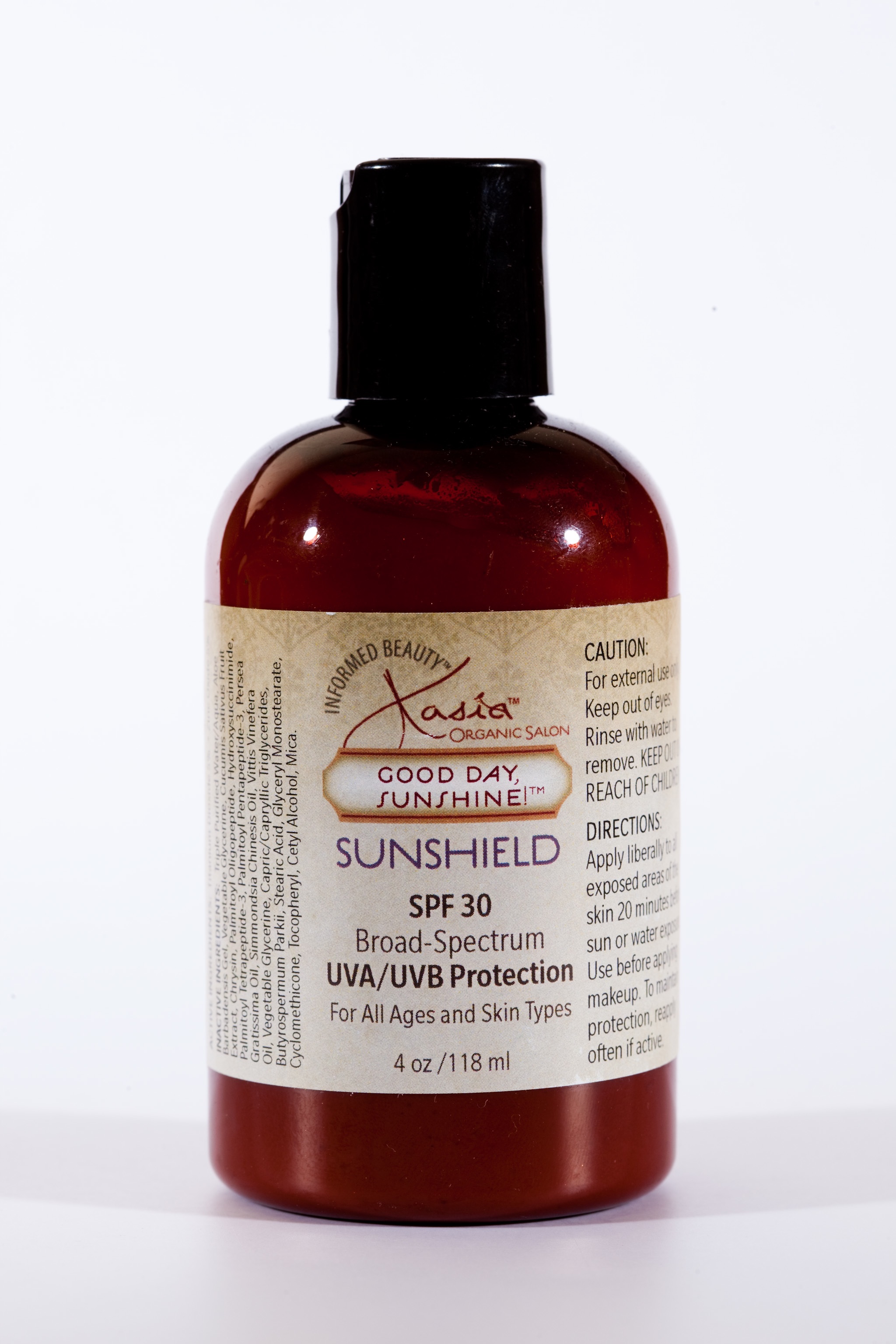
Kasia Good Day Sunshine Sunblock

Why is Kasia SUNSHIELD is part of only 8% of Sunscreens on the market, considered SAFE?

FACT: There are few active sunscreen ingredients that effectively block both  UVA and UVB rays.  Kasia uses zinc oxide and titanium dioxide, which are the only ones that are both safe and effective for UVA and UVB protection and  do not penetrate the skin but block or reflect the sun.

Hit List to AVOID!

Sure, avoid Parabens, but take extreme caution in avoiding sunscreens with Oxtinoxate, Octisalate, Oxybenzone or Homosalate. These chemicals are toxic and have high absorption rates through the skin.  They act as either irritants, allergens, hormone disruptors or carcinogens.